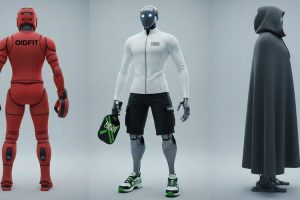
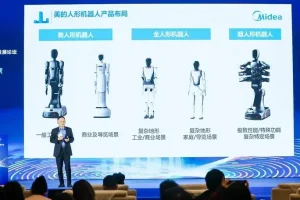




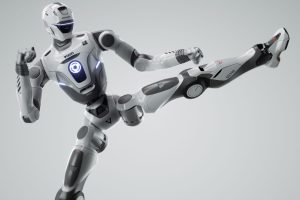


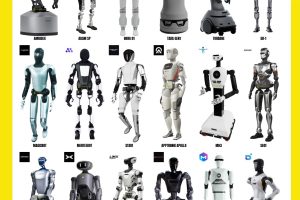

From martial arts demonstrations to athletic performances, these viral videos showcase humanoid robots achieving capabilities that seemed impossible just months ago
Introduction
The humanoid robotics revolution isn’t coming, it’s already here. What seemed like distant science fiction at the start of 2025 has become stunning reality by year’s end. Robots are now executing backflips, playing sports, performing martial arts, navigating complex environments, and demonstrating human like dexterity that’s redefining what machines can achieve.
This showcase compiles the most impressive, jaw-dropping, and technologically significant humanoid robot videos from 2025. These aren’t CGI mockups or speed manipulated demos, these are real robots performing real feats, captured on camera, representing the cutting edge of bipedal robotics, AI, and mechanical engineering.
Whether you’re a robotics enthusiast, sports fan curious about the future of athletic competition, investor tracking the industry, or simply someone amazed by technological progress, these videos demonstrate why humanoid robots are rapidly transitioning from research labs to real-world applications, including competitive sports.
Unitree H2 Dominates a G1 in the Ring
03/12/2025
- Robot Model: H2 & G1
- Manufacturer: Unitree
- Located: Hangzhou, China
- Capability Demonstrated: Combat Skills
- Specifications (H2): Height 180cm, Weight: 70kg, Arm Load 15kg, Speed 2m/s,
- Price: From $30,000
Tesla Optimus Runs Almost Perfectly Like a Human
02/12/2025
- Robot Model: Optimus
- Manufacturer: Tesla
- Located: Texas, United States
- Capability Demonstrated: Fast Humanlike Movement
- Specifications: Height 173cm, Weight: 56kg, Arm Load 20kg, Speed 2.2m/s,
- Price: Expected Around $30,000
Just set a new PR in the lab pic.twitter.com/8kJ2om7uV7
— Tesla Optimus (@Tesla_Optimus) December 2, 2025
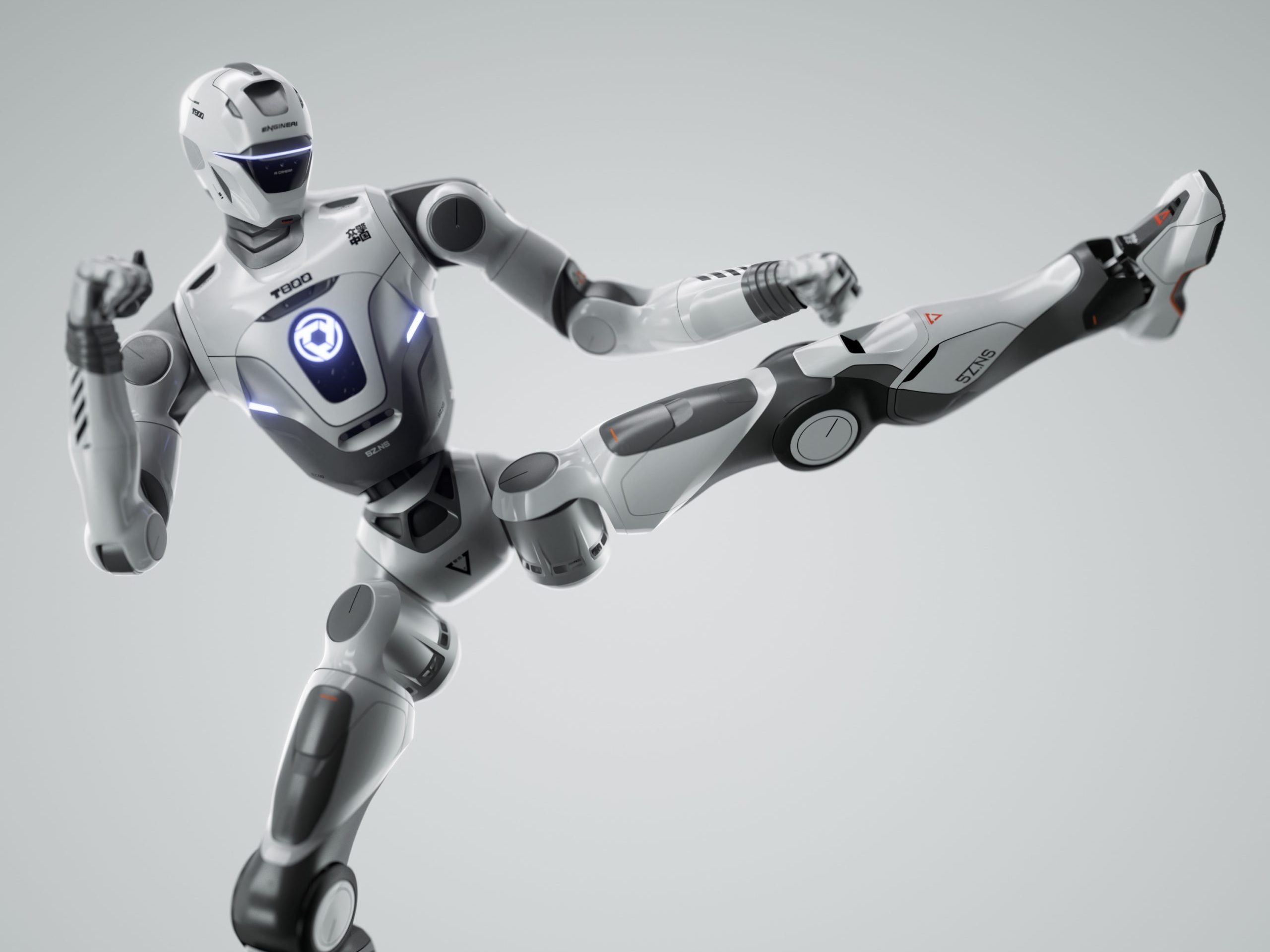
EngineAI T800 Demonstrates Incredible Combat Skills
02/12/2025
- Robot Model: T-800
- Manufacturer: EngineAI
- Located: Shenzhen, China
- Capability Demonstrated: Combat Skills
- Specifications: Height 173cm, Weight: 75kg, Arm Load 30kg, Speed 3m/s,
- Price: From $25,000
Embodied Avatar: Full-body Teleoperation Platform
06/11/2025
- Robot Model: G1
- Manufacturer: Unitree
- Located: Hangzhou, China
- Capability Demonstrated: Complete Full Body Teleoperation
- Specifications: Height 127cm, Weight: 35kg, Arm Load 2kg, Speed 2m/s,
- Price: Around $16,000
Unitree G1 Shows its Kung Fu and Martial Arts Capabilities
13/10/2025
- Robot Model: G1
- Manufacturer: Unitree
- Located: Hangzhou, China
- Capability Demonstrated: Kung Fu
- Specifications: Height 127cm, Weight: 35kg, Arm Load 2kg, Speed 2m/s,
- Price: Around $16,000
Unitree G1 “Anti Gravity” Mode
22/09/25
- Robot Model: G1
- Manufacturer: Unitree
- Located: Hangzhou, China
- Capability Demonstrated: Kung Fu
- Specifications: Height 127cm, Weight: 35kg, Arm Load 2kg, Speed 2m/s,
- Price: Around $16,000
What These Videos Reveal About Humanoid Robotics Progress
Collectively, these demonstrations represent more than isolated technical achievements, they reveal fundamental trends reshaping humanoid robotics and its applications in sports, industry, and daily life.
The Capability Explosion
The improvement curve in humanoid robotics isn’t linear, it’s exponential. Capabilities that didn’t exist 12 months ago are now routine. Movements that seemed impossible at the start of 2025 are being performed reliably by multiple robot models by year’s end.
Compare these 2025 videos to humanoid demonstrations from 2023 or 2024. The difference is staggering. Robots that could barely walk without falling are now executing complex acrobatics, engaging in combat sports, and navigating unpredictable environments autonomously.
From Scripted to Autonomous
Early humanoid demonstrations typically featured heavily scripted, pre-programmed movements in controlled environments. Many 2025 videos showcase robots making real-time decisions, adapting to dynamic situations, and recovering from unexpected disturbances, critical capabilities for competitive sports where opponents actively disrupt plans.
The integration of advanced AI, machine learning, and sensor fusion enables robots to “see,” process, and respond to their environment in ways that approximate human situational awareness. This transition from scripted performance to genuine autonomy represents perhaps the most significant breakthrough for humanoid sports viability.
The Authenticity Factor
Notice a common theme across recent demonstrations: manufacturers explicitly stating “no CGI, no speed manipulation, no video tricks.” This transparency directly addresses skepticism that plagued earlier robotics videos where audiences couldn’t distinguish real capability from digital enhancement.
The robotics community has learned that trust matters. When companies release unedited footage shot on mobile phones with no cuts, inviting frame-by-frame scrutiny, they build credibility that carefully produced promotional videos cannot match. This authenticity trend benefits the entire industry by establishing realistic expectations.
Hardware Meets Software
These videos showcase the convergence of mechanical engineering excellence with cutting edge AI. It’s not enough to build robots with powerful actuators and advanced sensors, they also need sophisticated control algorithms, neural networks for perception, and decision making systems that can operate in milliseconds.
The most impressive demonstrations feature robots that seamlessly integrate:
- Mechanical capability: Strong actuators, precise joints, robust structures
- Sensor systems: Cameras, LIDAR, force sensors, proprioception
- AI/ML algorithms: Computer vision, path planning, balance control
- Real-time processing: Making decisions fast enough to maintain dynamic stability
This integration is what separates impressive research projects from practical robots capable of competing in sports.
The Cost-Capability Revolution
Perhaps most significantly for humanoid sports: these advanced capabilities are appearing in increasingly affordable robots. High-end demonstrations aren’t limited to $100,000+ research platforms, robots costing $16,000-$30,000 are performing feats that would have required million-dollar budgets just years ago.
This democratization matters enormously for sports. When universities, sports organizations, and even enthusiasts can afford competition grade humanoids, the participant base expands dramatically, exactly what’s needed to build sustainable leagues and entertainment value.
Technical Capabilities Demonstrated
Across these videos, several core technical capabilities repeatedly appear, each critical for humanoid sports success:
Dynamic Balance and Recovery
The ability to maintain balance while moving, absorbing impacts, and recovering from disturbances is fundamental. Sports require robots to remain stable while executing strikes, changing direction rapidly, or being pushed by opponents. Videos showing robots maintaining balance on unstable surfaces, recovering from shoves, or catching themselves mid-fall demonstrate mastery of this critical capability.
Force Generation and Control
Combat sports and strength based competitions require robots to generate significant force while also modulating precisely. Videos showcasing powerful strikes, lifting heavy objects, or maintaining controlled movements under load demonstrate both raw capability and sophisticated control systems that prevent excessive force from causing damage.
Agility and Speed
The best humanoid sports will reward quick movements, rapid direction changes, and explosive actions. Demonstrations of robots sprinting, jumping, performing acrobatics, or transitioning smoothly between different movement types showcase the agility necessary for compelling competition.
Perception and Decision-Making
Autonomous operation requires robots to understand their environment and make appropriate decisions. Videos showing robots navigating obstacles, identifying objects, or responding to unexpected situations demonstrate the AI capabilities that will enable autonomous competition rather than purely teleoperated events.
Durability and Reliability
Sports require robots to operate continuously through matches, potentially sustaining impacts or falls. Demonstrations of robots recovering from falls, operating for extended periods, or continuing after minor failures showcase the mechanical robustness and software resilience necessary for competitive reliability.
What This Means for Humanoid Sports
These videos aren’t just impressive technical demonstrations, they’re proof that humanoid sports has transitioned from theoretical concept to practical reality.
Competition-Ready Capabilities
The robots featured in these videos possess capabilities sufficient for legitimate sports competition right now. They can move dynamically, generate force, maintain balance under pressure, and operate autonomously or semi-autonomously, the fundamental requirements for athletic competition.
This means humanoid sports leagues don’t need to wait for future breakthroughs. The technology exists today to host compelling competitions in combat sports, team sports, precision challenges, and endurance events.
The Entertainment Factor
Critically, these demonstrations aren’t just technically impressive, they’re visually spectacular. Robots performing backflips, executing martial arts combinations, or navigating complex obstacle courses create compelling content that attracts mainstream audiences, not just robotics enthusiasts.
Entertainment value matters enormously for sports success. Traditional sports thrive because they’re fun to watch, creating emotional engagement and narrative drama. These humanoid videos demonstrate that robot athletics can deliver visual spectacle comparable to, and in some cases exceeding, human sports.
Accessibility for Leagues and Teams
As robots demonstrating these advanced capabilities become more affordable, the barrier to entry for humanoid sports drops dramatically. Universities can field teams. Sports organizations can host tournaments. Individual enthusiasts can participate in amateur leagues.
This accessibility is how sports scale from niche novelty to mainstream entertainment. When thousands of competitors field robots across dozens of leagues, the talent pool deepens, innovation accelerates, and viewership grows, exactly the trajectory eSports followed from basement LAN parties to stadium championships.
Global Competition Dynamics
These videos come from manufacturers across the globe, China, United States, Japan, South Korea, and beyond. The international nature of humanoid development means sports leagues can feature truly global competition, with national teams representing different countries and technological philosophies competing for supremacy.
This international dimension creates narrative hooks similar to World Cup soccer or Olympic competitions, patriotic investment, national pride, and geopolitical subtext that elevate competitions beyond mere technical contests into cultural events.
The Technical Arms Race
Each impressive video raises the bar for competitors, driving rapid improvement cycles that benefit the entire industry. When one manufacturer demonstrates a capability, others rush to match or exceed it, creating positive competitive pressure that accelerates development.
For humanoid sports, this arms race mentality means:
Constant Capability Improvements: What’s impressive today becomes baseline tomorrow, pushing robots to achieve increasingly spectacular feats
Diverse Approaches: Different manufacturers pursue different strategies, some prioritizing speed, others strength, others precision, creating variety that makes competition more interesting
Innovation Spillover: Breakthroughs developed for sports applications often benefit industrial, medical, and consumer robots, creating broader societal value beyond entertainment
Lower Costs: Competition drives manufacturing efficiency and scale, reducing prices while maintaining or improving performance, making sports more accessible
From Viral Videos to Viable Industry
The progression from impressive demonstration videos to sustainable sports industry follows predictable patterns:
1st Phase: Proof of Concept (2023-2024) Early demonstrations proving robots can perform basic sports movements, walking, running, basic object manipulation
2nd Phase: Capability Expansion (2025—Current Phase) Advanced demonstrations showcasing combat-ready capabilities, complex movements, autonomous operation, building confidence that compelling competition is possible
3rd Phase: Competitive Events (2025-2027) First tournaments and leagues establishing rules, formats, and competitive structures, testing market appetite
4th Phase: Professional Leagues (2027-2030) Established competitions with sponsorships, broadcasting deals, professional teams, and sustainable business models
5th Phase: Mainstream Entertainment (2030+) Humanoid sports achieving cultural significance comparable to current professional sports leagues—major stadium events, global viewership, substantial economic impact
These videos represent Phase 2 transitioning into Phase 3, the capabilities exist, early competitions are happening, and the industry is testing what formats and rules create the most compelling competition.
Conclusion: The Future Is Already Here
These humanoid robot videos aren’t speculative glimpses of distant futures, they’re documentation of current reality. The robots performing these feats exist right now, developed by commercial companies, purchasable by qualified buyers, and capable of competing in sports competitions today.
The question facing the sports entertainment industry isn’t “will humanoid robots be capable enough for compelling competition?” They already are. The relevant questions are:
- Which sports formats will prove most popular with audiences?
- How quickly will leagues establish professional structures and broadcasting deals?
- Which manufacturers and countries will dominate early competitions?
- What regulatory frameworks will govern competitions?
- How will betting markets and sponsorships develop?
- When will humanoid sports achieve mainstream cultural acceptance?
The technical foundation is established. The videos prove it. What happens next depends on entrepreneurs, sports organizations, broadcasters, and audiences deciding to embrace this new form of athletic entertainment.
Every time a new impressive humanoid video goes viral, generating millions of views, sparking discussion, and capturing imagination, the path toward mainstream humanoid sports becomes clearer. These aren’t just technical demonstrations. They’re marketing materials for an emerging industry, proof points that the future of sports isn’t entirely human, and invitations for audiences to join something genuinely new.
The robots are ready. The question is: are we?
Stay Updated on Humanoid Robot Breakthroughs
New impressive humanoid demonstrations emerge constantly as manufacturers push technological boundaries. Subscribe to the Humanoid Sports Network newsletter for curated coverage of the latest viral robot videos, technical breakdowns of impressive capabilities, competition announcements, and analysis of what new demonstrations mean for the future of humanoid sports.
Don’t miss the next breakthrough that reshapes what we believe robots can achieve.