




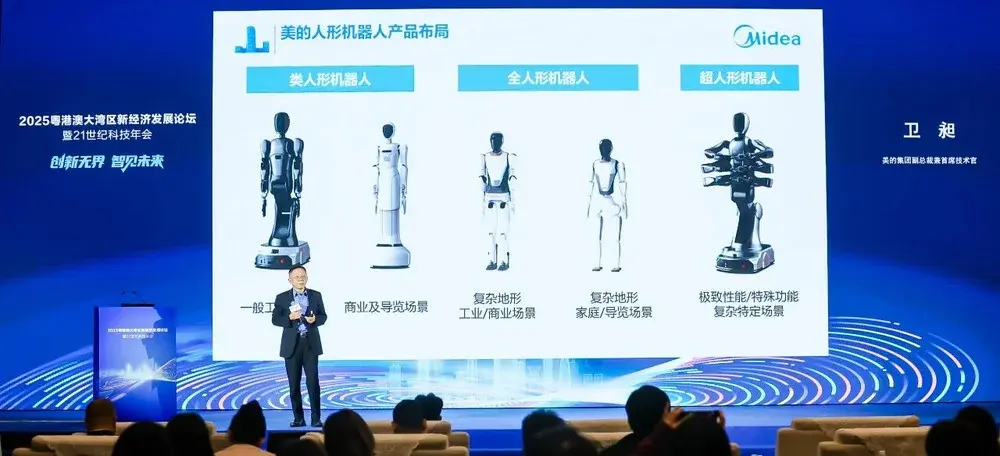
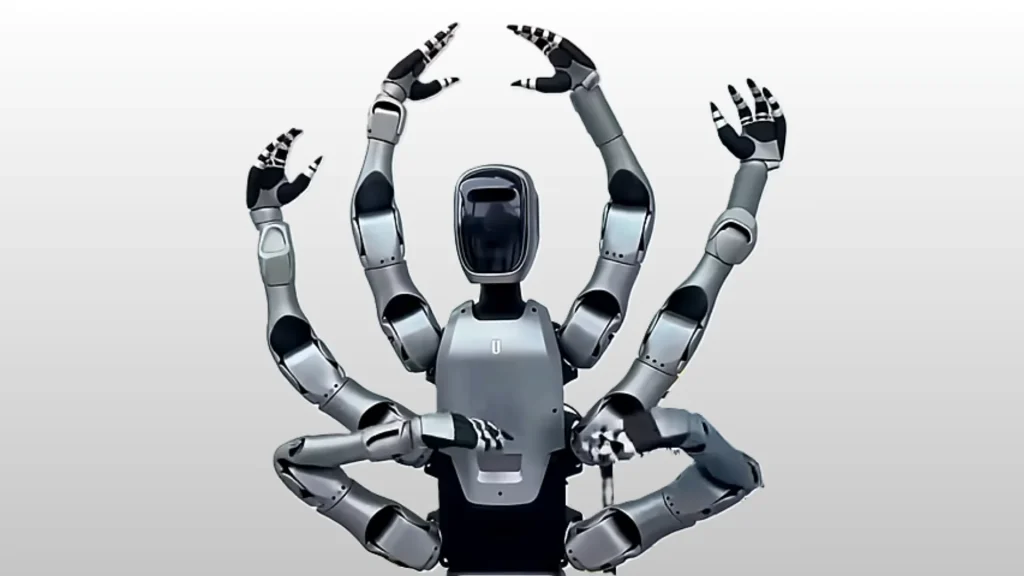
Chinese tech giant Midea Group has officially unveiled MIRO U, the world’s first six-armed, wheeled-legged humanoid robot, marking a revolutionary leap in industrial automation that promises to redefine manufacturing efficiency.
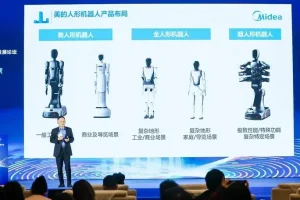
In a groundbreaking announcement at an event in Guangzhou, China, Midea Group introduced MIRO U as the industry’s first six armed humanoid robot designed to break through human physiological limitations. The third generation model in Midea’s humanoid robot lineup represents a quantum leap in industrial robotics, with factory deployment scheduled for late December 2025 at the company’s high end washing machine facility in Wuxi.
Breaking Through Human Limits with Six Arms
MIRO U features six bionic mechanical arms with high-precision control and fast switching end effector modules, enabling the robot to perform multiple complex tasks simultaneously, something no human worker could achieve. The robot’s innovative wheel leg design combines the stability of wheeled movement with the flexibility of humanoid form, supporting vertical lifting and 360 degree in place rotation.
Wei Chang, Midea’s Vice President and CTO, confirmed that all technology underlying MIRO U was developed in house, demonstrating the company’s deep research capabilities and technological independence. This represents a significant milestone for Chinese robotics innovation in an increasingly competitive global market.
Revolutionary Multi-Tasking Capabilities
Unlike traditional two armed humanoid robots that mirror human anatomy, MIRO U’s six arm configuration enables unprecedented multitasking capabilities in industrial environments. The robot can simultaneously handle material inspection, equipment monitoring, quality control, and assembly tasks, dramatically reducing cycle times and increasing production line flexibility.
The enhanced design builds upon Midea’s earlier MIRO model, which has been operating successfully since August 2024 at the company’s Jingzhou factory. The earlier model worked alongside autonomous mobile robots, single arm four wheel bots, KUKA robotic systems, and human workers, creating a collaborative ecosystem that MIRO U will now join and enhance.
Similar innovative approaches are being explored across the humanoid robotics industry. The Unitree G1 humanoid robot recently demonstrated world-first basketball capabilities, showing how humanoid platforms are pushing boundaries in different applications.
Factory Deployment and Performance Targets
Midea plans to deploy MIRO U at its Wuxi high-end washing machine factory by the end of December 2025, with ambitious performance targets. The robot is expected to improve takt time and increase production line adjustment efficiency by up to 30%, representing a substantial leap in manufacturing productivity.
This deployment strategy reflects broader trends among Chinese manufacturers embracing humanoid robotics. As we’ve seen with Chang’an Auto’s recent investment in humanoid robotics, China’s automotive and appliance industries are racing to integrate advanced robotics into their production lines.
Midea’s Comprehensive Robotics Strategy
MIRO U is part of Midea’s broader dual-track robotics program. The industrial-focused ‘Miro’ series has completed three iterations, while the ‘Mila’ series, aimed at commercial and residential environments, is in final testing. Midea plans to introduce Mila robots at its offline experience stores in 2026 for customer guidance and interactive product demonstrations.
The company’s commitment to robotics runs deep, with cumulative R&D investment exceeding 60 billion yuan (approximately $8.4 billion) over the past five years. Through its 2017 acquisition of Germany’s KUKA Group, one of the world’s top four industrial robot companies, Midea gained access to world-class robotics expertise and manufacturing capabilities.
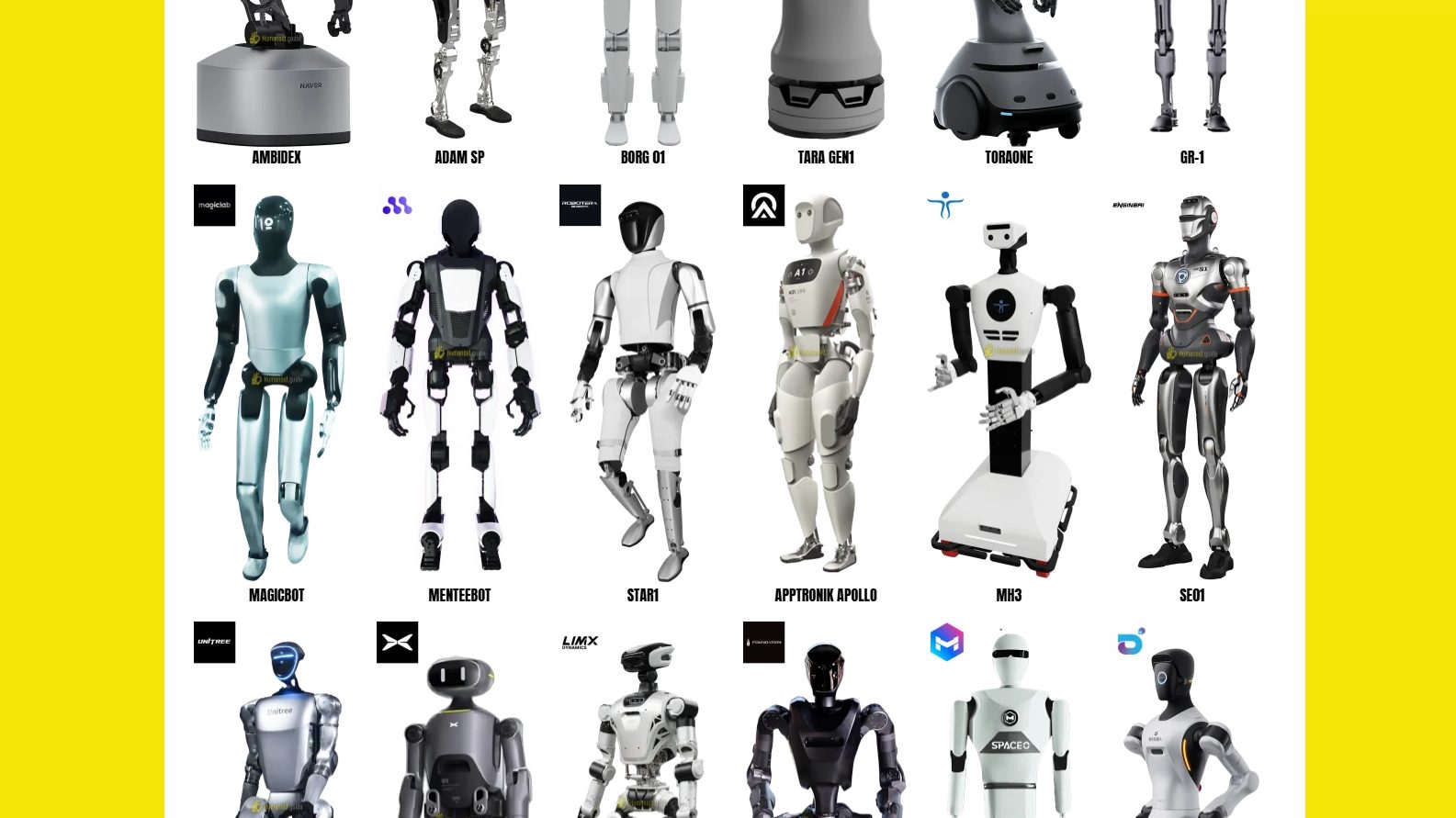
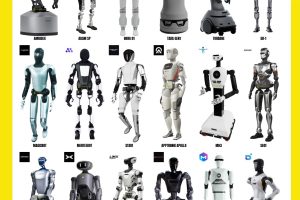
According to Gizmochina, this positions Midea as a formidable player in the global humanoid robotics race, competing against established players like Tesla’s Optimus, Figure AI’s humanoid robots, and other emerging platforms.
The Competitive Landscape
The unveiling of MIRO U comes amid intensifying global competition in humanoid robotics. Japan’s Humanoid Robot Alliance recently expanded with 13 new members in a coordinated push to counter Chinese dominance, highlighting the geopolitical dimensions of robotics development.
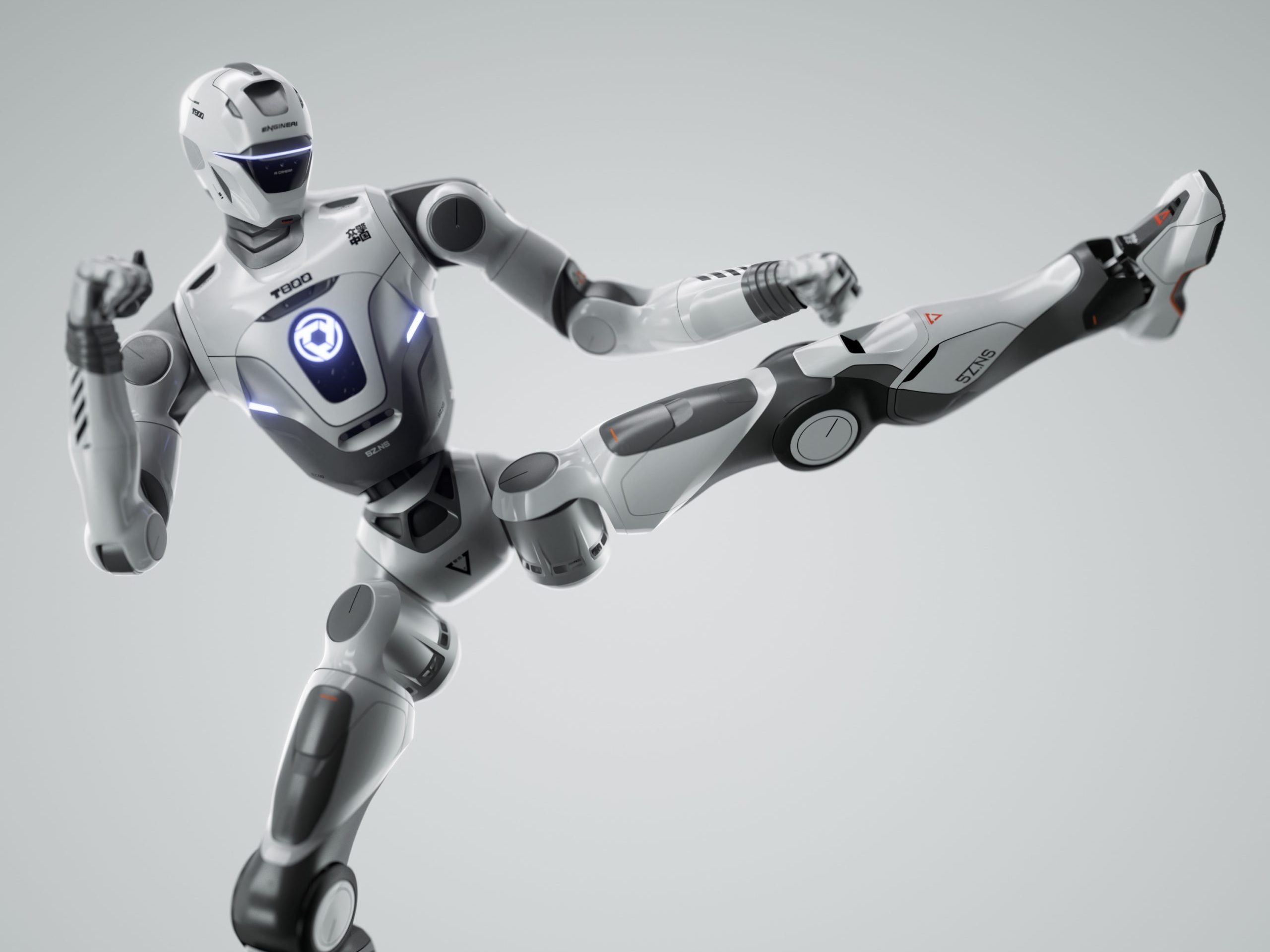
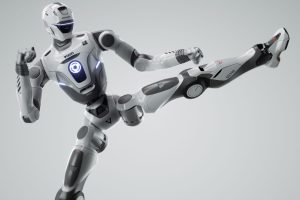
Meanwhile, recent demonstrations have showcased the rapid advancement of humanoid capabilities. From jaw dropping athletic feats to robotic combat applications, humanoid robots are increasingly demonstrating real world versatility that extends far beyond factory floors.
Regulatory Considerations and Market Outlook
As humanoid robots move from laboratories to factories and eventually homes, regulatory frameworks are evolving rapidly. Companies and consumers need to understand humanoid robot ownership laws, regulations, and insurance requirements as these machines become more prevalent in society.
According to the International Federation of Robotics, global industrial robot shipments reached 518,000 units in 2023, a 9% year-on-year increase, with humanoid and collaborative robots serving as key growth drivers. The humanoid robotics market is projected to reach between $50 trillion and $60 trillion as costs decline and capabilities improve.
What This Means for Manufacturing
MIRO U represents more than just technological innovation, it signals a fundamental shift in how factories will operate in the coming decades. By breaking through human physiological limits with its six-armed design, the robot can perform tasks that would require multiple human workers, operating continuously with consistent precision.
The 30% efficiency improvement target suggests significant economic benefits for manufacturers who adopt such technology. As production becomes more automated and intelligent, factories will transition from places where humans work with machines to environments where humans supervise and collaborate with highly capable robotic systems.
Looking Ahead
Midea stated it will continue to invest in artificial intelligence and robotics, with large scale deployment of humanoid robots remaining a key priority in its long-term strategy. This commitment, combined with the company’s vertical integration from core components to complete robotic systems, positions Midea as a leader in the emerging humanoid robotics industry.
As MIRO U begins factory operations this month, the industrial world will be watching closely to see how this six armed marvel performs in real world production environments. Success could accelerate adoption of multi armed humanoid designs across global manufacturing, fundamentally changing how we think about factory automation.
Stay Updated on Humanoid Robotics
The humanoid robotics revolution is accelerating rapidly. Don’t miss critical updates on new deployments, breakthrough technologies, and industry analysis. Subscribe to the Humanoid Sports Newsletter for weekly insights delivered directly to your inbox.