




UPDATE: The T800 has now been officially unveiled, and it’s Astonishing
Terminator Inspired Machine Takes Center Stage in Emerging Robot Combat Industry
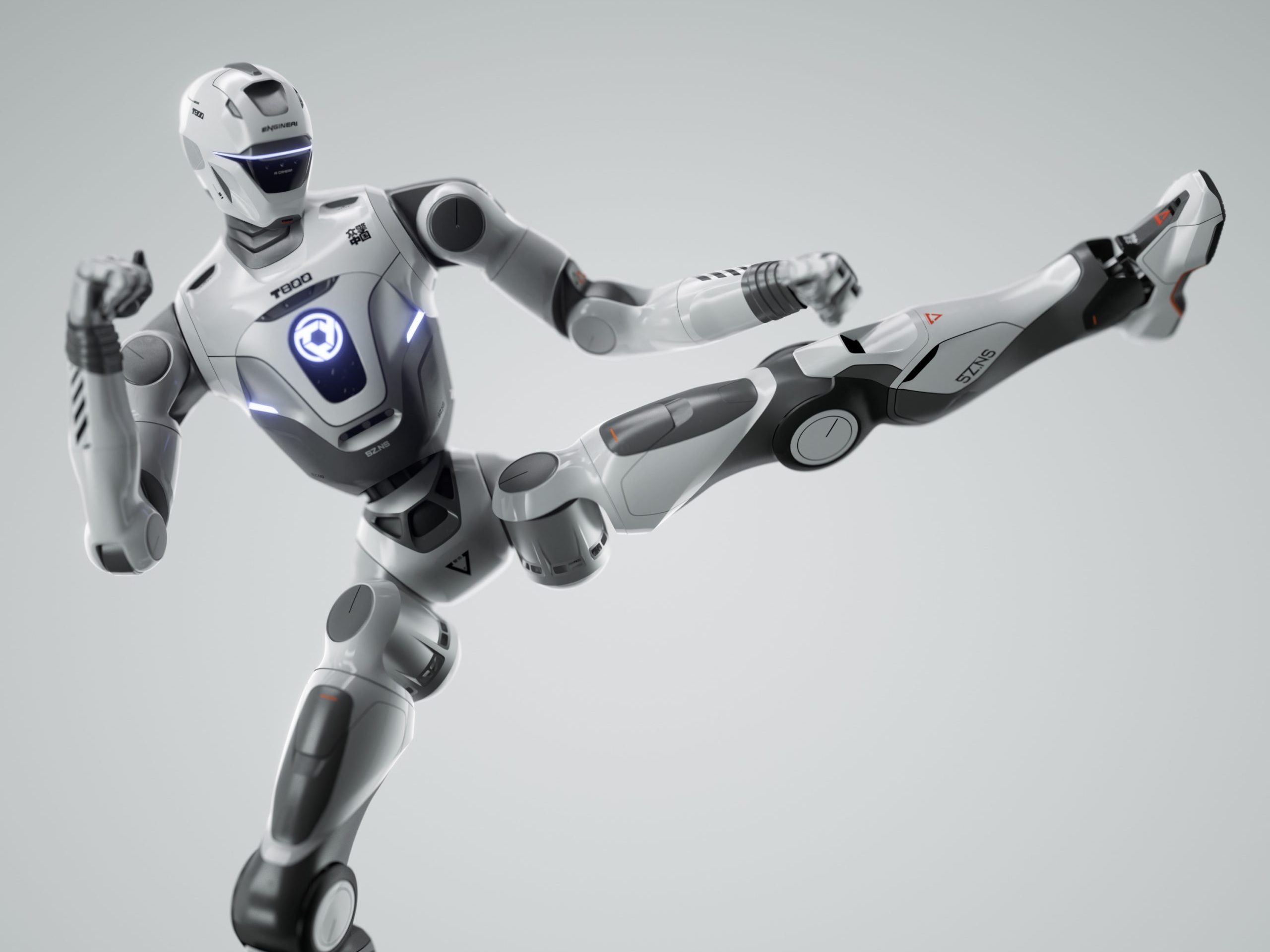
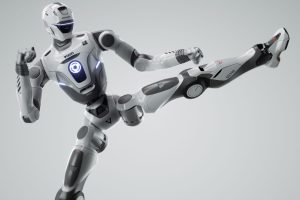
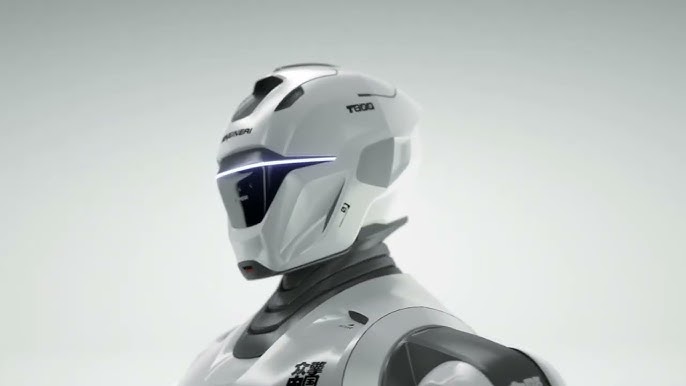
In a bold departure from the robotics industry’s typical focus on logistics and manufacturing, EngineAI Robotics has unveiled the T800. A full size humanoid robot explicitly marketed as “combat-ready” and engineered specifically for robot boxing and fighting competitions. Named after the iconic synthetic assassin from The Terminator film franchise. The T800 represents EngineAI’s aggressive push into the rapidly growing robot combat sports sector.
The T800 stands 1.85 meters (6 ft 1 in) tall, weighs 85 kilograms (187 lbs), and packs 41 high-degree-of-freedom joints, a solid-state battery, and aluminum-alloy covers for added structural resilience. It made its global debut at the 2025 World Robot Conference in Beijing, where the company staged it on a Game of Thrones–style “Iron Throne” to highlight its entertainment-driven marketing strategy.
Built for Battle: Technical Specifications Optimized for Combat
The T-800 features a multi sensor fusion perception system, integrating vision, tactile, and force sensors, enabling real time awareness of complex environmental changes. These capabilities are crucial for combat scenarios where robots must rapidly assess opponent movements and respond with appropriate defensive or offensive actions.
The robot utilizes an internal high performance computing unit to make rapid and precise decisions, substantially boosting operational capability in high dynamic environments. Unlike EngineAI’s flagship SE01 humanoid, which excels at fluid, humanlike motions for commercial applications, the T800 is specifically engineered for strength and resilience in competitive fighting scenarios.
In traditional boxing, the T800 would fall into the cruiserweight division, like Evander Holyfield, but it’s right on the edge of heavyweight. This substantial build gives the T800 significant advantages in robot combat sports, where structural integrity and power delivery prove critical to competitive success.
The inclusion of solid state battery technology represents a significant technical advancement. These batteries replace the liquid electrolyte in typical lithium ion packs with solid material, reducing fire risk, allowing for higher energy storage in the same space, and handling more charge cycles. This technology ensures the T800 can sustain operation through multiple combat rounds without battery degradation compromising performance.
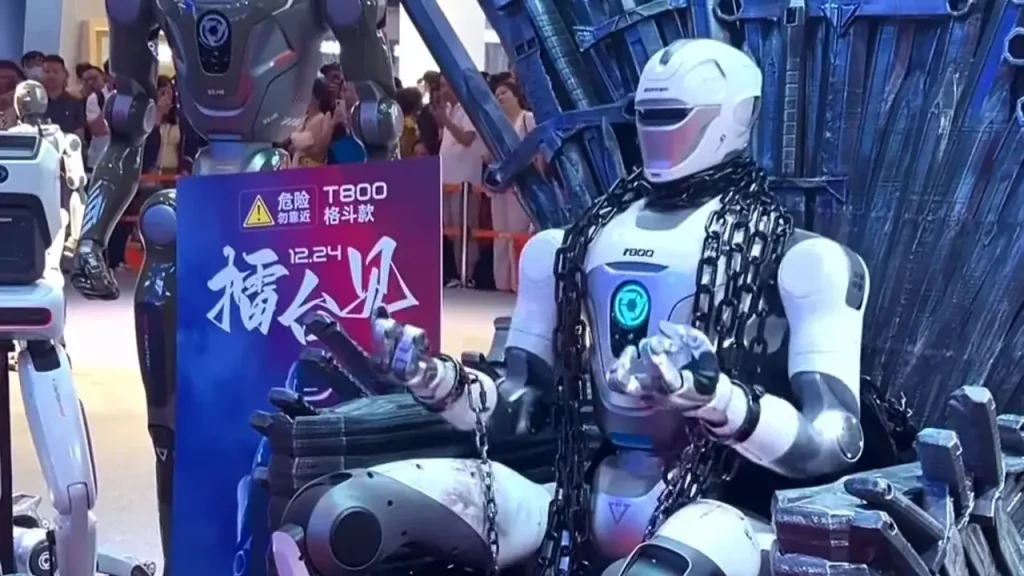
Mecha King Tournament: December 24th Showdown
The T800 is scheduled to be a core competing model in the “Robot Boxer” free combat competition hosted by ENGINEAI on December 24th. Designed to be the ultimate test of the robot’s dynamic stability and AI capabilities. This event, officially titled the EngineAI Robot Free Combat Tournament: “Mecha King,” will take place in Shenzhen and represents what organizers describe as the world’s first full scale humanoid robot combat tournament.
The organizing committee stated that Shenzhen EngineAI will provide the latest humanoid robots with source codes made public and available to all participating teams. This open source approach allows competing teams to customize and train their robots, creating diverse fighting styles and strategies rather than simply deploying identical machines.
Competing teams will engage as humanoid robot combat clubs and their robots must simulate human movements and perform combat actions under specified rules using intelligent decision making systems to respond in real time to complex environments. This requirement for real time intelligent decision making significantly raises the technological bar beyond earlier robot combat competitions that relied primarily on remote human control.
According to EngineAI, the event will feature full scale humanoids and introduce pioneering rules that demand real time intelligent decision making. These rules aim to push the boundaries of what humanoid robots can achieve in terms of autonomous combat capability, serving as a proving ground for embodied AI technology.
Strategic Entertainment Technology Hybrid Approach
EngineAI’s aggressive marketing of the T800 as “combat-ready” reflects the company’s distinctive dual strategy approach. This aggressive R&D push runs in parallel with a surprisingly pragmatic, public facing commercial strategy, with EngineAI recently deploying its humanoids as “Cyber Staff” in a new Shenzhen retail store in a cooperative venture with e-commerce giant JD.com.
This dual approach, mixing high impact spectacle with steady commercial deployment, is becoming EngineAI’s signature. The company recognizes that robot combat sports generate valuable publicity and public engagement while simultaneously providing extreme testing conditions that accelerate technological development.
Industry experts believe these high pressure scenarios are invaluable for refining robotic structure, motion control, and AI, with algorithms optimized for the extreme conditions of combat having practical applications such as improving the stability of robots handling heavy loads in everyday tasks.
The entertainment value cannot be understated. In addition to the combat, a new variety show will be launched, blending technology and entertainment to create viral content. This media savvy approach positions EngineAI to capture attention far beyond the robotics industry’s traditional audience.
Company Background: From Stealth Startup to Combat Sports Pioneer
EngineAI was founded in late 2023 by Zhao Tongyang. A serial robotics entrepreneur who previously founded Dogotix in Shenzhen in 2016 and later led Xpeng’s humanoid robotics program before leaving to establish EngineAI. The startup shocked the Internet last fall when it introduced its flagship humanoid, the SE01, that immediately set a new benchmark for lifelike bipedal locomotion.
Now the company’s team of about 110 is targeting unicorn status, having raised over $160 million to date. More recent reports indicate EngineAI has secured $181 million in total funding, with investors including major players like Xpeng affiliated Rockets Capital, JD.com, CATL Capital, and Fortune Capital. The reports say Engine is aiming for a $1 billion valuation.
The company’s rapid ascent demonstrates both the quality of its technology and the strategic timing of its emergence. Founded just as China’s government announced national policy goals to dominate the humanoid robotics market by 2027, EngineAI has positioned itself at the intersection of government support, private investment, and consumer interest in robotics entertainment.
“The posture and the way they walk are just the first step. When intelligence is combined with form, it becomes even harder to distinguish them from real humans,” said Zhao Tongyang, EngineAI’s founder. This vision extends beyond simple walking to comprehensive humanlike capabilities, including the ability to fight.
Robot Combat Sports: An Emerging Global Industry
The T800’s development comes amid explosive growth in robot combat sports. In May 2025, Hangzhou hosted the China Media Group World Robot Competition, Mecha Fighting Series, described as the world’s first humanoid robot fighting tournament. That event, which featured Unitree Robotics’ G1 robots in boxing matches, drew national television coverage on China’s state run CCTV-10 science channel and demonstrated massive public appetite for robot combat entertainment.
Combat fighting is a difficult task for humanoid robots due to the intensive confrontation during the fight, with robots needing to mind their movements and react to their opponent’s moves. These technical challenges require sophisticated algorithms, robust electronic components, and high quality speed reducers that can handle rapid, forceful movements without failure.
Beyond China, American leagues are emerging to capitalize on this trend. REK (Robot Embodied Kombat) launched a five city US tour in November 2025, using VR headsets to allow operators to “embody” robots for immersive combat experiences. UFB (Ultimate Fighting Bots) partnered directly with Unitree as the official robotics supplier for its Los Angeles debut event. These developments signal that robot combat sports are evolving from novelty demonstrations into genuine entertainment industries with commercial viability.
The EngineAI Robot Free Combat Tournament: “Mecha King” marks a significant milestone in the robotics industry, aiming to push the boundaries of artificial intelligence and robotics technology, driving industrial upgrades and large scale applications.
Why Combat Sports Matter for Robotics Development
While robot boxing tournaments might appear to be pure spectacle, they serve crucial technical purposes that justify the investment. Combat scenarios create extreme testing conditions that reveal engineering weaknesses far more effectively than controlled laboratory environments. When robots throw punches, maintain balance while being struck, and must make split second defensive decisions, they’re exercising capabilities directly relevant to industrial applications.
“Combat fight is a difficult task for humanoid robots due to the intensive confrontation during the fight. Robots need to mind their movements and react to their opponent’s moves. All these requirements significantly challenge the robots’ algorithms, electronic parts and speed reducers.” Solving these challenges produces robots capable of handling unpredictable real world conditions in warehouses, disaster zones, or healthcare environments.
The data generated during combat competitions proves invaluable for training AI systems. “First, we captured the data of the movements of some professional kick boxing athletes, and then the robots can learn these movements in the virtual world.” This process of capturing human expertise and transferring it to robots through machine learning accelerates development timelines dramatically compared to traditional programming approaches.
When robots are able to dance, exercise and fight, they will be made lighter for application in people’s daily lives and production. Accelerating the large scale deployment of humanoid robots in industrial, service and medical sectors. Combat sports thus serve as both proving ground and public demonstration of capabilities that will eventually transform multiple industries.
Technical Challenges: From Remote Control to Autonomous Combat
Current robot combat competitions primarily feature remotely controlled machines, where human operators guide robot movements in real time. EngineAI’s December tournament aims to raise the bar significantly by requiring autonomous intelligent decision making rather than direct human control.
This represents an enormous technical leap. Autonomous combat requires robots to:
- Perceive opponent position, orientation, and movement patterns through sensor fusion
- Predict opponent actions based on previous patterns and current positioning
- Select appropriate offensive or defensive responses from extensive movement libraries
- Execute chosen actions with precise timing and force control
- Maintain balance and stability despite taking hits or executing complex movements
- Adapt strategies mid fight based on what’s working or failing
These capabilities demand sophisticated AI systems that can process sensory data, make decisions, and execute actions within milliseconds. The T800’s high performance onboard computing unit and multi sensor fusion system provide the hardware foundation for these capabilities, but the software challenges remain formidable.
Market Context: China’s Humanoid Robot Ambitions
EngineAI’s T800 development aligns with China’s aggressive national strategy in humanoid robotics. According to the Chinese Institute of Electronics, China’s humanoid robot market is projected to reach 870 billion yuan ($120 billion) by 2030. The government has implemented policies and financial incentives to ensure Chinese companies lead this emerging market.
Shenzhen has developed a comprehensive AI industry chain, covering everything from intelligent chips and algorithm frameworks to software and hardware applications, with the city home to more than 2,200 AI companies. This ecosystem advantage allows companies like EngineAI to rapidly prototype, test, and iterate designs with access to world class component suppliers and technical talent.
The competitive landscape is intensifying. Fellow Shenzhen companies including UBTECH, LimX Dynamics, Lumos Robotics, and Unitree Robotics are all racing to capture market share in various humanoid robot segments. EngineAI’s decision to focus on combat sports as a differentiation strategy reflects the crowded nature of the market and the need for distinctive positioning.
Product Lineup: Beyond Combat
While the T800 captures headlines with its combat ready marketing, EngineAI maintains a diverse product portfolio targeting multiple market segments. The company’s SE01 flagship humanoid stands 170 cm (5’5″) tall and weighs 55 kg (121 lbs), designed for general purpose applications with emphasis on humanlike movement quality.
The PM01, a shorter humanoid priced starting around $14,000, has gained significant attention for its dancing abilities and appearance in viral videos, including a collaboration with popular streamer IShowSpeed. EngineAI followed this with the SA02, an anime inspired social companion robot priced at $5,300, undercutting competitors and targeting young consumers.
This product strategy, maintaining affordable consumer oriented robots alongside specialized combat machines. Allows EngineAI to generate revenue from educational and research markets while developing cutting edge technology through competition focused products like the T800.
Looking Ahead: The Future of Robot Combat Sports
As the December 24th Mecha King tournament approaches, anticipation builds for what could represent a watershed moment in robotics entertainment. Success could validate robot combat as a legitimate sport with commercial viability, sponsorship opportunities, and broadcast appeal. Failure could expose the technology’s limitations and suggest the industry needs more development time before autonomous combat becomes compelling entertainment.
The competition will introduce pioneering rules for humanoid robot combat, requiring robots to simulate human movement patterns and make real time intelligent decisions in complex environments. These rules will be closely watched by the global robotics community as potential standards for future competitions.
The broader implications extend far beyond entertainment. If EngineAI and competitors can successfully demonstrate humanoid robots making complex real time decisions in unpredictable high stress environments, they’ll have proven capabilities relevant to search and rescue operations, hazardous material handling, military applications, and numerous industrial scenarios.
The T800’s “combat ready” marketing might initially appear to be hyperbole designed for attention, but it reflects a genuine engineering focus on robustness, strength, and real time decision making under adversarial conditions. Whether this Terminator inspired machine lives up to its namesake’s legendary durability will be tested when the first punches are thrown on December 24th.
When Spectacle Meets Substance
EngineAI’s T800 represents more than just clever marketing or entertainment spectacle. It embodies a strategic bet that combat sports can accelerate humanoid robot development while generating public engagement and commercial opportunities. By explicitly designing a robot for fighting and organizing tournaments to showcase its capabilities, EngineAI has positioned itself at the forefront of an emerging industry that blends technology, sports, and entertainment.
The December Mecha King tournament will provide crucial data points about the current state of humanoid robot capabilities, the viability of autonomous combat sports, and public appetite for this new form of entertainment. Success could validate EngineAI’s approach and trigger increased investment in combat focused robot development globally. Regardless of competitive outcomes, the T800 has already achieved its primary objective: capturing attention and positioning EngineAI as an innovative, bold player willing to push boundaries in ways that more conservative robotics companies avoid.
As robot combat sports evolve from novelty demonstrations to potentially mainstream entertainment, the T800 stands as a landmark development. The first humanoid robot explicitly marketed and engineered for fighting, backed by a company willing to invest heavily in competitions that could define the industry’s future. The Terminator has arrived, and this time, it’s coming to a boxing ring near you.
Discover what the Humanoid Sports scene has in store over the next few years