




Welcome to the ultimate resource for understanding humanoid sports, robot combat, and the emerging robotics industry. Whether you’re a curious newcomer or looking to get involved in this revolutionary field, we’ve answered the most common questions about humanoid robots and their athletic capabilities.
General Humanoid Robotics FAQs
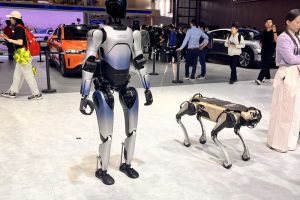
Humanoid robots are bipedal machines designed to mimic human form and movement. They typically feature two legs, two arms, a torso, and a head, allowing them to navigate environments built for humans and perform tasks in ways that resemble human actions. Unlike specialized robots designed for single tasks, humanoid robots aim for versatility across multiple applications.
Humanoid robot pricing varies dramatically:
Budget-friendly: Unitree G1 ($16,000), Unitree H2 ($29,900)
Mid-range: EngineAI T800 ($50,000-90,000 estimated)
Premium: Boston Dynamics Atlas ($200,000+)
Enterprise: Tesla Optimus (pricing TBA, targeting affordability)
Chinese manufacturers have dramatically disrupted pricing, offering capable humanoids at a fraction
of Western competitors’ costs.
Currently, Chinese companies dominate manufacturing and affordability, while American companies lead in AI development and entertainment production. China has positioned humanoid robotics as a strategic national priority with massive government investment, resulting in companies like Unitree Robotics disrupting the market through aggressive pricing and rapid development. However, Western companies maintain advantages in intellectual property, AI software, and specialized applications.
The global humanoid robotics market is projected to surge from $2.92 billion in 2025 to $15.26 billion by 2030, representing a 39.2% compound annual growth rate. By 2050, the industry could be worth $5 trillion, with China alone expected to have 302.3 million humanoid robots.
Both approaches exist. Fully autonomous humanoid soccer was demonstrated in 2025, showcasing AI-powered teamwork without human intervention. However, for combat sports, most current implementations use human pilots controlling robots in real-time, as AI cannot yet match human strategic thinking in dynamic combat scenarios. Hybrid approaches combining human strategy with AI-assisted movements are emerging.
Most current humanoid robots operate for 1-4 hours on a single charge depending on activity level. Combat and athletic activities drain batteries faster than standing or light movement. Companies like EngineAI are developing solid-state battery technology to extend operation times and improve safety.

Humanoids Sports & Competition FAQs
2025 marked the transition of humanoid sports from concept to reality, featuring unprecedented milestones including the Beijing Half Marathon with robot participants, the world’s first humanoid boxing competition in Hangzhou, fully autonomous soccer matches, and the inaugural World Humanoid Robot Games in Beijing with 280 teams from 16 countries competing across 26 events.
The inaugural World Humanoid Robot Games was held in Beijing from August 15-17, 2025, featuring 280 teams from 16 countries competing across 26 events. Held at the iconic Bird’s Nest stadium, the games included track and field, gymnastics, soccer, martial arts, and dance performances, along with practical scenario-based challenges in industrial, hospital, and hotel environments.
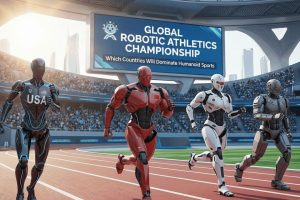
Current humanoid robots still lag significantly behind human performance. For example, the fastest humanoid 100-meter sprint time is 21.50 seconds compared to Usain Bolt’s 9.58-second world record. Most humanoid robots walk at 2-7 km/h, slower than the average human walking pace of 5 km/h. However, the performance gap is narrowing rapidly with each generation of robots.
Sports competitions accelerate robotics development by creating pressure to solve real-world problems under competitive conditions. Technologies developed for robot athletes have applications in disaster response, healthcare, dangerous industrial work, and elderly care. The public visibility of sports also generates funding and interest that isolated research cannot achieve.
Yes, humanoid robots are expanding beyond competition into training applications. They can serve as tireless training partners, consistent sparring opponents, rehabilitation assistants, and performance testing tools that help human athletes improve their skills without risk of injury to training partners.
Various humanoid robot sports are currently being explored:
Running: Marathons, sprints, hurdles, relays
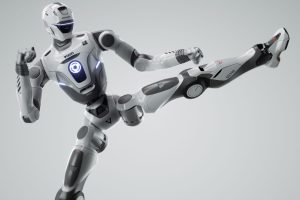
Combat sports: Boxing, kickboxing, martial arts
Team sports: Soccer (2v2, 5v5, fully autonomous)
Gymnastics: Freestyle and coordinated routines
Dance: Solo and group performances
Basketball: Shooting demonstrations
Specialized challenges: Industrial tasks, service scenarios
Various sports present unique challenges that drive innovation in different aspects of robotics.

Humanoid Combat Sports FAQs
Several companies are racing to dominate humanoid combat sports:
Hardware Manufacturers:
Unitree Robotics: Provides the G1 model ($16,000), the de facto standard for robot fighting
EngineAI: Developed the T800 combat-ready humanoid (1.85m tall, 85kg)
Agibot: Rising contender with the Lingxi X2 robot
Entertainment Companies:
REK (Robot Embodied Kombat): VR-controlled fighting with sold-out U.S. tour
Ultimate Fighting Bots: Accessible remote-controlled combat league
EngineAI’s Mecha King: Tournament scheduled for December 2025
Yes. In November 2025, Ari Emanuel, CEO of TKO Group Holdings (which oversees UFC and WWE), expressed interest in hosting robot fights featuring humanoid robots like Tesla’s Optimus. This signals potential mainstream adoption of robot combat sports by established entertainment organizations.
The Unitree G1 is a 127-132cm tall humanoid robot weighing 35kg, priced at approximately $16,000. It has become the industry standard for robot combat due to its affordability, combat-suitable capabilities including 23-43 degrees of freedom, walking speeds up to 2 m/s, 1-2 hours of battery life, and mechanical robustness that withstands repeated impacts while remaining safe around humans.
The primary difference lies in control philosophy. REK emphasizes immersion through VR headsets and motion-capture combat controllers, creating a one-to-one embodied experience. UFB focuses on accessibility through familiar gaming interfaces, lowering barriers to entry. REK targets premium live entertainment experiences, while UFB enables 24/7 remote participation from anywhere globally.
The EngineAI T800 is a purpose-built combat humanoid standing 1.85 meters tall and weighing 85kg, placing it in the cruiserweight to heavyweight range by boxing standards. It features 41 high-degree-of-freedom joints, solid-state battery technology, and a multi-sensor fusion perception system designed specifically for combat scenarios.
Humanoid Royale is being explored as a potential format combining elements from video games with physical robot combat. The concept envisions multiple humanoid robots competing simultaneously in elimination-style competitions, leveraging the popularity of battle royale gaming formats for spectator entertainment.

Getting Started & Participation
Yes! Events are becoming increasingly common worldwide. Major competitions include the annual World Humanoid Robot Games, UFB events in multiple cities with plans for expansion, REK tour dates in major U.S. cities, and manufacturer-hosted demonstrations and exhibitions. Follow event organizers on social media and check their websites for upcoming schedules and ticket availability.
Visit Humanoid Sports Network regularly for comprehensive coverage of: Competition results and event schedules, Technological innovations and breakthrough demonstrations, Company profiles and industry trends, Practical guides for getting involved
The industry needs diverse talents:
Engineering: Mechanical, electrical, software engineers
AI/ML specialists: For developing robot intelligence
Event production: For organizing competitions
Business development: For commercialization and partnerships
Maintenance technicians: For robot upkeep and repair
Content creators: For media, marketing, and community building
Many roles don’t require robotics expertise, particularly in entertainment, business operations, and supporting services.
Rapidly developing industry
The humanoid sports and robotics industry is evolving rapidly, transitioning from laboratory experiments to mainstream entertainment and practical applications. Whether you’re interested in competing, investing, building a business, or simply following this revolutionary technology, understanding the landscape is essential.
2025 has proven that humanoid sports are here to stay, with sold-out events, world records, international competitions, and major entertainment figures taking notice. The robots are out of the lab and into the arena, and the future of sports and work is being written right now.
Ready to dive deeper? Subscribe to our free weekly Humanoid Sports Newsletter