

How UFB’s Accessible Control System and Unitree Partnership Are Democratizing Humanoid Combat Sports
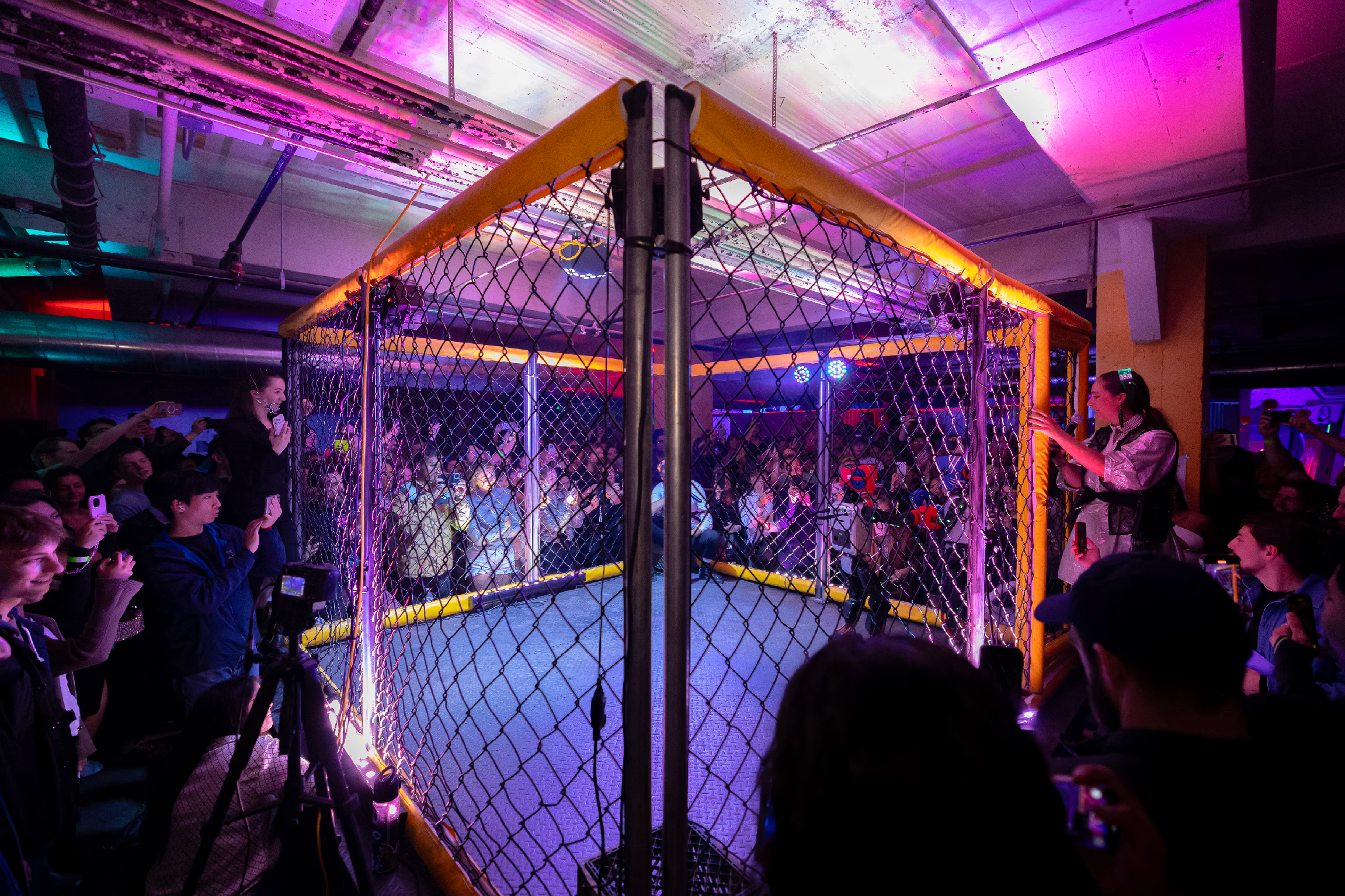
The vision of humanoid robots battling in boxing rings, made famous by the 2011 film “Real Steel”, is rapidly transitioning from Hollywood fiction to competitive reality. At the forefront of this transformation stands Ultimate Fighting Bots (UFB), a humanoid fighting league that distinguishes itself through unprecedented accessibility: anyone with a game controller or keyboard can remotely pilot a fighting robot from anywhere in the world. This democratized approach to robot combat, combined with theatrical robot personalities and strategic partnerships with Chinese robotics giant Unitree, positions UFB as a potential mainstream gateway for robot fighting sports.
Founded in early 2025 and describing itself as “the world’s first robot combat league where humans pilot robots in real-time battles,” UFB has already hosted multiple events across California, with ambitious expansion plans targeting venues nationwide and eventually globally. The league’s platform allows operators to control humanoid robots using traditional console controllers, keyboard inputs, or Nintendo Joy-Cons, eliminating the VR headset requirements and specialized equipment that might limit participation in competing leagues. This accessibility first philosophy reflects UFB’s bet that robot combat will achieve mass appeal similar to esports rather than remaining a niche technical demonstration.
The UFB Platform: Making Robot Fighting Accessible
Remote Operation from Anywhere
UFB’s core innovation lies in its web-based control platform enabling robot operation from any location with internet connectivity. Fighters log into the UFB website, connect standard gaming controllers or keyboards, join matchmaking rooms, and within minutes find themselves controlling physical humanoid robots located in UFB arenas potentially thousands of miles away. This “play from anywhere” model mirrors online gaming more than traditional sports, fundamentally changing who can participate.
The platform supports multiple input methods, each offering different control philosophies. Nintendo Joy-Cons enable motion-based inputs where physical punch movements translate to robot strikes, a middle ground between full VR immersion and button-based controls. Traditional game controllers (Xbox, PlayStation) provide familiar interfaces for gamers accustomed to fighting games, with button combinations executing specific moves. Keyboard controls offer the most basic accessibility, allowing participation without purchasing specialized hardware.
This flexibility means a teenager in Tokyo, a robotics engineer in Berlin, and a casual gamer in Texas can all compete in the same tournament using whatever input device they prefer. The system essentially treats physical humanoid robots as avatars in a multiplayer fighting game, except the “graphics” are real robots captured by arena cameras, and the physics engine is reality itself.
Matchmaking and Tournament Structure
Ultimate Fighting Bots operates on a dual-track system accommodating both casual play and competitive tournaments. Casual mode allows users to connect anytime, join public rooms, and spar against other online players in unranked matches. This constant availability removes scheduling barriers, unlike physical sports requiring coordinated times and locations, robot fighting can happen 24/7 as long as robots remain operational and at least two players want to fight.
Tournament mode provides structured competition with prize pools, brackets, and championship titles. These events attract more serious competitors and generate viewership through livestreams on platforms including Twitch and YouTube. Prize pools remain modest compared to established esports, likely in the hundreds to low thousands of dollars, but create competitive incentive beyond casual experimentation.
The platform tracks fighter statistics, win-loss records, and performance metrics enabling rankings and reputation systems. Top-performing pilots gain recognition within the community and invitations to special events, mimicking the progression systems in competitive gaming that drive sustained engagement.
Robot Personalities: Creating Characters, Not Just Machines
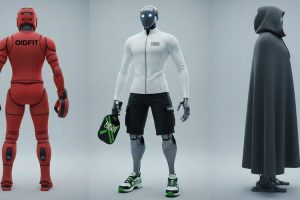
UFB distinguishes itself from purely technical robot demonstrations through theatrical presentation treating robots as distinct characters with personalities, backstories, and rivalries. The league’s website features detailed profiles for robots including “the.DISRUPTOR,” “Peuter Steel,” “Gridiron Omega,” and “Colonel Havoc”, each with tongue-in-cheek descriptions that blend tech startup culture with fighting game tropes.
The.DISRUPTOR, for example, is characterized as a hoodie-wearing hyperactive robot who dropped out of robot college after one semester. The profile notes the robot talks rapidly and treats every fight like a startup pitch, constantly trying new features mid-battle while asking for funding. This satirical take on Silicon Valley culture resonates with the tech-savvy audience likely to engage with robot fighting sports.
Peuter Steel represents the corporate villain archetype, described as blending cold efficiency with startup buzzwords, wearing a fleece zip-up and puffer vest while treating every fight like a boardroom presentation. These anthropomorphized characterizations create narrative hooks that pure technical demonstrations lack, giving audiences characters to root for or against.
This personality-driven approach mirrors professional wrestling more than traditional combat sports. While the physical competitions remain genuine, robots actually fight, outcomes aren’t predetermined, the theatrical framing creates entertainment value beyond just technical performance. Casual viewers who don’t understand robotics engineering can still engage with character storylines and rivalries.
The Unitree Partnership: Hardware Meets Competition Platform
In November 2025, Ultimate Fighting Bots announced a strategic partnership with Unitree Robotics, the Chinese manufacturer whose humanoids have dominated early robot fighting competitions. Unitree serves as the official robotics partner for UFB, providing the humanoid platforms used in UFB events and benefiting from combat testing that accelerates development while generating marketing exposure.
Why Unitree G1 Dominates Robot Fighting
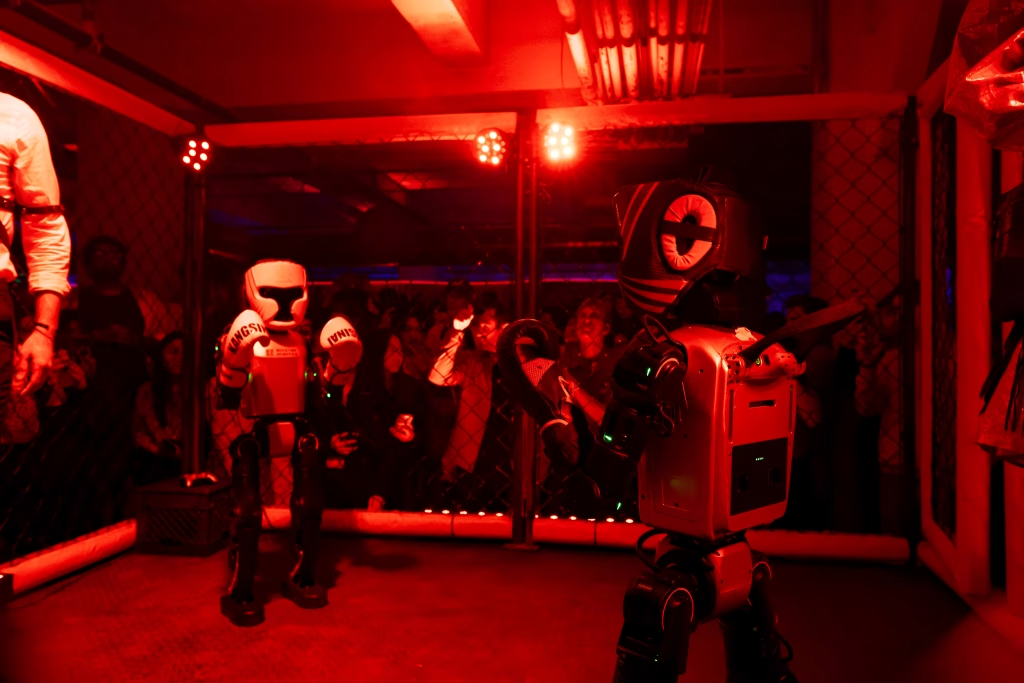
The Unitree G1 humanoid robot has emerged as the de facto standard platform for robot combat sports, used by both UFB and competing league REK. Priced around $16,000, drastically lower than most humanoid robots, the G1 combines affordability with capabilities specifically suited to fighting applications. Standing 127-132 centimeters tall and weighing 35 kilograms, the G1 approximates a large child’s dimensions, making it manageable yet substantial enough to deliver visible impact.
The robot features 23-43 degrees of freedom depending on configuration, enabling punching, blocking, dodging, and footwork movements essential for combat. Walking speeds up to 2 meters per second (7.2 km/h) allow dynamic movement around the ring, though still significantly slower than average human walking pace. Battery life provides 1-2 hours of active operation, sufficient for multiple fight rounds with strategic power management.
Critically, the G1’s mechanical robustness withstands repeated impacts without catastrophic failure. REK’s CTO Amanda Watson described the G1 as tough enough to handle combat yet safe enough that it “can’t hurt you”, an important safety consideration given that these robots operate near human operators and spectators. This balance between durability and safety makes the G1 ideal for the current phase of robot fighting where the sport establishes viability without regulatory frameworks.
Unitree’s Strategic Incentives
For Unitree, partnership with UFB provides multiple strategic benefits beyond direct robot sales. Combat sports generate high-visibility demonstrations showcasing robot capabilities under extreme conditions. When G1 robots throw combinations, absorb strikes, and maintain balance during fights, they’re demonstrating capabilities directly relevant to industrial applications where robots must handle dynamic, unpredictable environments.
The entertainment angle also builds brand recognition among consumers who might never purchase industrial robots but represent future customers for household humanoids. Unitree’s long-term vision includes robots serving as home assistants, companions, and helpers, applications requiring the same balance, manipulation, and environmental awareness tested during combat sports.
Additionally, combat sports provide valuable training data for AI development. Every fight generates footage of robots moving, reacting, recovering from impacts, and adapting to opponent tactics. This real-world data complements simulation training, helping accelerate the development cycles that make robots progressively more capable with each iteration.
UFB vs REK: Competing Visions for Robot Combat
The November 2025 announcement of UFB’s Los Angeles event coincided with competing league REK’s announcement of a five-city U.S. tour, with both leagues scheduling Los Angeles events within days of each other. This direct competition between Ultimate Fighting Bots and REK reflects fundamentally different philosophies about how robot combat sports should function.
Control Philosophy Differences
REK emphasizes immersion through VR headsets and motion-capture “combat controllers” worn on arms, allowing operators to “embody” robots in one-to-one experiential mapping. When the operator throws a punch, the robot mirrors the movement. This creates visceral connection between pilot and machine, making fighters feel like they’re physically in the ring rather than controlling avatars remotely.
UFB prioritizes accessibility through familiar gaming interfaces. Traditional controllers lower barriers to entry, anyone who has played video games can immediately understand button combinations and analog stick controls. This approach sacrifices immersion for participation, betting that volume of casual engagement matters more than depth of immersive experience for a few dedicated enthusiasts.
The philosophical split mirrors debates in the broader VR industry between advocates believing VR’s killer app requires full immersion and pragmatists suggesting mainstream adoption demands reducing hardware requirements and complexity. UFB’s approach aligns with the pragmatist camp, arguing that robot fighting succeeds by attracting millions of casual participants rather than thousands of hardcore VR enthusiasts.
Market Positioning and Audience Targeting
REK positions itself as premium experience emphasizing the spectacle of seeing robots fight in person. The league’s San Francisco event at Temple Night Club significantly overbooked the 2,500-person venue capacity, demonstrating appetite for live robot combat as experiential entertainment. REK features high-profile pilots including Twitch co-founder Justin Kan and UFC veteran Hyder Amil, leveraging celebrity to attract audiences.
UFB focuses on distributed accessibility and always-available play. While live events create excitement, the platform’s core value lies in enabling 24/7 robot combat accessible globally. This approach mirrors online gaming’s evolution where persistent accessibility eventually generates larger audiences and revenue than periodic in-person events, even if individual events lack the same spectacle.
Both leagues might ultimately coexist serving different market segments, REK capturing premium live entertainment demand while UFB dominates casual online participation. Alternatively, one approach might prove decisive, with the losing league adopting elements of the winner’s model or exiting the market entirely.
Event History and Growth Trajectory
Early Events and San Francisco Underground Scene
UFB’s origins trace to San Francisco’s tech-forward underground scene where early demonstrations occurred in venues hosting startup parties and tech gatherings. Initial events capitalized on the Bay Area’s concentration of robotics engineers, tech entrepreneurs, and early adopters willing to experiment with emerging entertainment forms.
These early demonstrations established proof-of-concept that remote-controlled humanoid robot fighting could function as compelling entertainment. Videos from these events went viral on social media platforms, particularly Twitter/X, generating organic marketing far exceeding what paid advertising could achieve. Clips showing robots throwing punches while human operators controlled them from laptops captured imagination and curiosity.
Venice, California Event (October 2025)
Ultimate Fighting Bots’s first major publicized event occurred October 18, 2025, in Venice, California. While detailed attendance figures and event outcomes remain limited in public sources, social media presence and community discussion suggest successful execution that validated the concept at larger scale than previous underground demonstrations.
The Venice event established templates for future UFB competitions including arena setup, camera placement for streaming, matchmaking systems, and spectator engagement. Lessons learned from this event likely informed November’s Los Angeles expansion and partnership negotiations with Unitree.
Los Angeles Expansion and Unitree Partnership Launch (November 2025)
The November 15, 2025, Los Angeles event marked UFB’s partnership debut with Unitree, officially branding Unitree as the league’s robotics hardware provider. The event’s timing, four days after competing league REK’s Los Angeles tour stop, created direct competitive comparison where both leagues’ approaches faced real-world market testing simultaneously.
Ultimate Fighting Bots announced plans for a permanent “UFB LA House” in Los Angeles, suggesting transition from periodic events to standing venue enabling regular competitions. This infrastructure investment indicates confidence in sustained audience interest and represents significant capital commitment to the league’s viability.
Expansion Plans and Venue Strategy
UFB’s business model includes venue partnerships where the league brings robot fighting events to interested locations. The platform allows venues to host UFB competitions, attracting customers through novel entertainment while UFB expands geographic footprint without bearing full venue costs. This distributed model enables faster scaling than building company-owned venues in every market.
Venues benefit from differentiated offerings in crowded entertainment markets. A sports bar, arcade, or esports venue hosting weekly UFB tournaments creates unique value proposition attracting robot fighting enthusiasts while introducing the concept to casual patrons. The recurring nature drives repeat visits as community forms around local competitions.
Business Model and Monetization
Multiple Revenue Streams
UFB’s platform structure enables diverse monetization approaches layering revenue streams rather than depending on single sources. Participation fees represent the most direct model, charging operators small fees to enter tournaments or access premium features creates transaction-based revenue scaling with usage.
Spectator fees through paid livestreams or premium viewing options capture value from audiences who watch rather than pilot robots. Major esports tournaments generate millions through streaming revenue, advertising, and sponsorships. Robot fighting, if it achieves comparable viewership, could monetize similarly through platform subscriptions (Twitch subscriptions, YouTube memberships) and advertising during broadcasts.
Venue partnerships generate revenue through profit-sharing arrangements or licensing fees. Venues pay to host UFB-branded events, providing equipment, staff, and promotion while Ultimate Fighting Bots provides platform, branding, and operational support. This creates recurring revenue from established venues while expanding presence.
Merchandise and collectibles represent ancillary revenue from robot character branding. If robot personalities like “the.DISRUPTOR” achieve fan followings, apparel, physical robot models, and digital collectibles could generate revenue beyond core platform operations.
The Esports Parallel
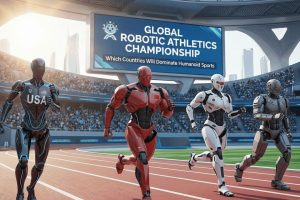
UFB explicitly positions robot fighting as “the next evolution of sport” rather than niche technical demonstration. This framing suggests ambitions matching esports’ trajectory from underground LAN parties to billion-dollar industry with professional leagues, streaming platforms, and mainstream recognition.
Key parallels support this vision. Like early esports, robot fighting combines accessible entry (anyone with internet can participate), spectator-friendly format (easy to understand combat with clear winners), viral content potential (robot fighting videos generate massive social media engagement), and youth appeal (younger demographics driving gaming and tech adoption).
However, important differences exist. Esports require only software infrastructure, games can scale to millions of players with marginal cost approaching zero. Robot fighting requires physical hardware, arena space, maintenance, and logistics creating meaningful per-participant costs. This structural difference might limit scale or require different business model innovations.
Technical Challenges and Current Limitations
Latency and Control Responsiveness
Remote robot operation over internet connections faces inherent latency between operator input and robot response. Even with optimized networks, 50-100 millisecond delays occur, creating timing challenges for precise movements. In fast-paced combat where split-second reactions matter, latency can determine fight outcomes in ways that frustrate operators and undermine competitive legitimacy.
UFB must continuously optimize network architecture, robot response systems, and control algorithms to minimize perceptible delay. The company likely implements predictive algorithms showing operators where robots will be rather than where they currently are, compensating for latency through anticipation. However, these software solutions can’t eliminate fundamental physics of signal transmission.
Robot Durability and Maintenance
Combat sports stress robots far beyond typical use cases. Repeated impacts, falls, and high-speed movements accelerate component wear and create failure modes engineers didn’t anticipate during development. UFB must maintain robot fleets operational despite continuous punishment, requiring extensive maintenance between fights.
Current humanoid robots lack the mechanical robustness of purpose-built combat machines like BattleBots competitors. Humanoids optimize for bipedal locomotion and manipulation rather than impact resistance. While Unitree G1 robots withstand casual combat, serious fighting might exceed their durability thresholds, requiring frequent component replacement or modified competition rules limiting damage.
AI and Autonomous Capabilities
Current Ultimate Fighting Bots fights feature entirely human-operated robots without autonomous AI assistance. This puts control difficulty on human operators managing dozens of simultaneous inputs (balance, footwork, guards, strikes) through simplified interfaces. As robots incorporate more sophisticated AI, questions arise about appropriate human-AI division of control.
Full autonomy, robots fighting without human input remains maybe years away given current AI limitations in dynamic physical environments. However, partial autonomy assisting with balance, basic defensive reactions, or move execution while humans provide strategic direction might emerge sooner. UFB must navigate this evolution carefully, preserving human agency and competition legitimacy while leveraging AI capabilities that enhance rather than replace human piloting.
Cultural Context: Why Robot Fighting Resonates Now
The “Real Steel” Generational Influence
The 2011 film “Real Steel” introduced millions to the concept of robot boxing, creating cultural reference point that makes UFB’s pitch immediately comprehensible. Rather than explaining the concept from scratch, UFB can simply invoke “Real Steel” and audiences instantly understand the vision. This cultural priming lowers marketing barriers and creates pre-existing enthusiasm.
The film’s premise, where human boxers are replaced by robots but human trainers/operators remain central, perfectly captures UFB’s model. The human element (pilot skill, strategy, training) provides emotional stakes that pure robot automation would lack. Audiences root for human operators and their robotic proxies, creating engagement dynamics familiar from traditional sports.
Tech Convergence Enabling the Vision
Multiple technological trends converge making robot fighting viable now rather than remaining science fiction. Affordable humanoid robots from Chinese manufacturers like Unitree bring hardware costs from millions to tens of thousands. Cloud gaming infrastructure and 5G networks enable responsive remote operation. Streaming platforms provide distribution reaching global audiences. Social media creates viral marketing potential that traditional advertising couldn’t match.
This technological convergence means visionary ideas proposed for decades can suddenly manifest as commercial reality within months. Ultimate Fighting Bots capitalizes on this moment where enabling technologies align, infrastructure exists, and cultural readiness meets technical capability.
The Spectacle Vacuum in Sports Entertainment
Traditional sports face challenges engaging younger, digitally-native audiences showing declining interest in watching three-hour baseball games or football marathons filled with commercial breaks. These audiences crave innovation, novelty, and digital integration that legacy sports struggle to provide given their tradition-bound formats.
Robot fighting offers spectacle optimized for digital consumption, short, intense matches perfect for social media clips, constant action without downtime, novel enough to stand out in crowded attention economy, and inherently visual in ways that translate to screens. These characteristics position robot fighting as potential breakout sport for audiences that traditional sports are losing.
Future Scenarios: Where UFB Could Go
Mainstream Sports Entertainment
The optimistic scenario sees robot fighting achieving mainstream sports entertainment status comparable to MMA, professional wrestling, or esports. In this future, Ultimate Fighting Bots operates regular seasons with professional pilots, major brands sponsor events and robots, television networks broadcast premium fights, and tens of millions globally follow the sport casually with millions as dedicated fans.
This scenario requires several things to break right. Technology must advance sufficiently that fights become consistently exciting rather than frequently interrupted by technical failures. Business model must prove sustainable generating profits that justify continued investment. Cultural adoption must reach critical mass where robot fighting appears on mainstream sports media rather than just tech blogs.
If achieved, this mainstream success creates enormous value for early movers like UFB. Being the established platform when mass adoption occurs positions UFB similarly to how UFC dominated MMA or how League of Legends shaped competitive gaming.
Niche Enthusiast Community
The middle scenario sees robot fighting establishing as niche enthusiast community comparable to competitive robotics, fighting game tournaments, or specialized motor sports. In this future, tens of thousands participate actively with hundreds of thousands following casually, generating enough revenue to sustain operations and gradual growth but never breaking into mainstream consciousness.
This scenario likely proves sustainable for UFB and participants while disappointing those expecting revolutionary transformation. The league operates profitably at modest scale, hosts regular events attracting dedicated community, and grows incrementally as technology improves and awareness spreads. This “successful niche” outcome represents reasonable base case rather than failure.
Early-Stage Hype Cycle Fade
The pessimistic scenario sees current enthusiasm as temporary hype cycle that fades once novelty wears off and technological limitations become apparent. In this future, casual audiences watch initial demonstrations out of curiosity but don’t develop sustained interest. Technical problems (latency, robot failures, boring fights) undermine entertainment value. Competing forms of entertainment capture attention instead.
This scenario doesn’t necessarily mean permanent failure, technology might need more development time before attempting mainstream audiences, with UFB either persisting through difficult growth period or pausing operations until capabilities mature. History shows many technologies require multiple attempts before achieving adoption, with early efforts teaching lessons enabling eventual success.
Accessible Control Defining UFB’s Competitive Edge
Ultimate Fighting Bots’ defining characteristic, accessible game-controller operation enabling anyone to pilot fighting robots remotely, represents a deliberate strategic choice differentiating the league from VR-focused competitors. By prioritizing participation volume over immersive experience depth, UFB bets that robot fighting’s path to mainstream success runs through democratization rather than exclusivity.
The Unitree partnership provides hardware foundation enabling this strategy, combining affordable humanoid platforms with combat-suitable durability. The G1’s $16,000 price point, dramatically lower than most humanoid robots makes fleet operations economically viable while the robot’s mechanical design withstands combat stress. This partnership positions both companies advantageously as robot fighting establishes itself, with UFB gaining reliable hardware supply and Unitree capturing marketing benefits from high-visibility combat demonstrations.
The competitive dynamic with REK creates productive tension driving innovation as both leagues experiment with different approaches to the same basic concept. Rather than winner-take-all competition, the market might ultimately support multiple leagues serving different audience segments with UFB capturing casual online participation while REK dominates premium live events. Alternatively, one model might prove decisively superior, with the market consolidating around the winning approach.
Ultimate Fighting Bots Bright Future
Whether Ultimate Fighting Bots achieves mainstream sports status, establishes as sustainable niche, or represents early stage experimentation before the category matures, the league has already achieved something significant: making robot fighting real rather than fictional. As humanoid robots continue advancing and combat sports competitions proliferate globally, UFB’s accessible platform positions it as potential gateway through which millions first experience the visceral thrill of controlling fighting robots.
The vision of humanoid robots boxing for human entertainment is no longer confined to movies, it’s happening now, controlled by game controllers, viewable on livestreams, and accessible to anyone curious enough to join a match. That transformation from science fiction to accessible reality represents the fundamental achievement underlying UFB’s existence. Whether the league becomes the UFC of robot fighting or remains historical footnote in the technology’s development, it has already helped usher in the era where humans pilot robots in combat as entertainment, sport, and technical demonstration.
The ring is set. The controllers are connected. The robots are ready. And the fight for who defines robot combat sports’ future has only just begun.
Discover all the options open to investors interested in Humanoid Robotics