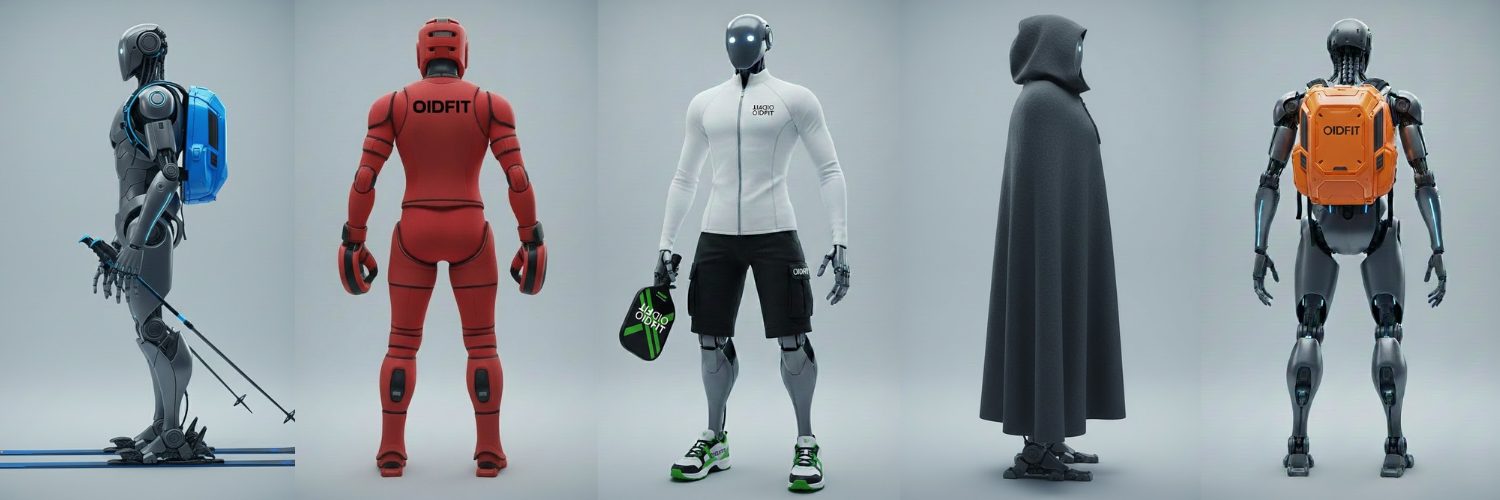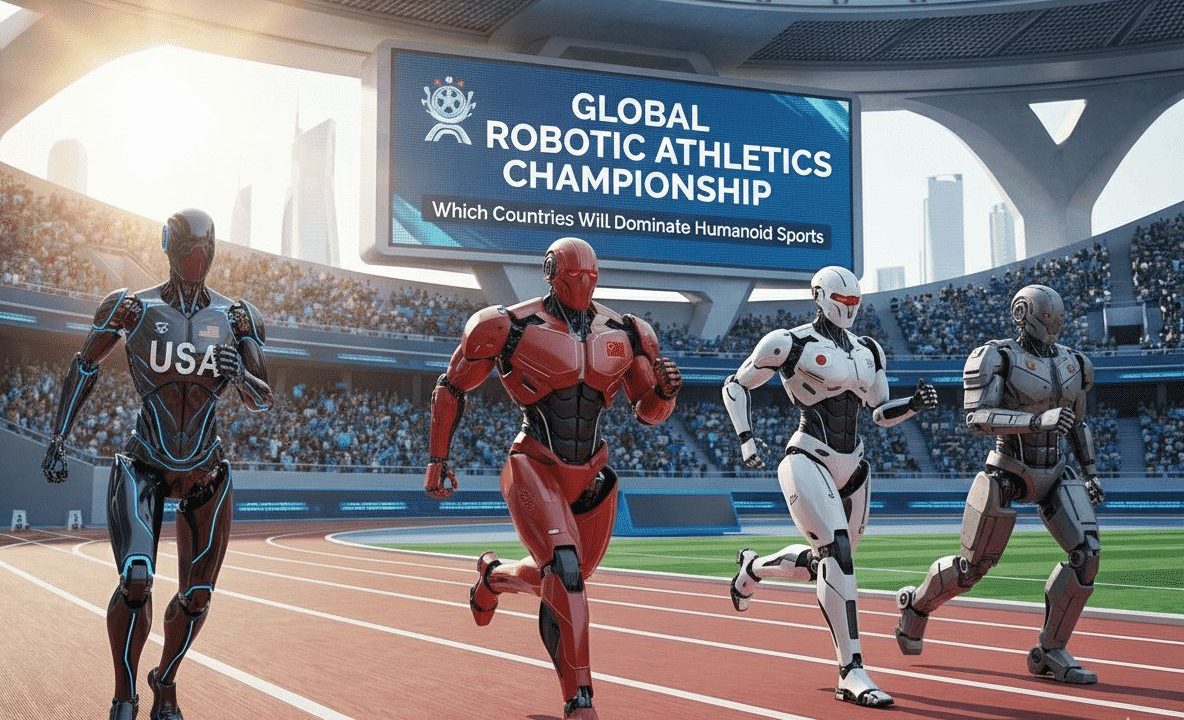








The emergence of humanoid robot sports in 2025 marks a watershed moment in entertainment history. As bipedal robots compete in everything from boxing matches to soccer tournaments, a fundamental question arises: just how massive could this industry become? With the broader humanoid robotics market projected to explode from $1.9 billion in 2025 to potentially $103.96 billion by 2035, the entertainment and sports segment represents one of the most captivating applications of this transformative technology.
The Humanoid Robotics Market: Foundation for a Sports Revolution
The humanoid robot industry is experiencing exponential growth that few sectors can match. Multiple market research firms project staggering expansion, with consensus estimates suggesting the market will grow at compound annual growth rates (CAGR) between 38-47% through 2030-2035.
According to recent industry analysis, the global humanoid robot market is expected to reach between $11-15 billion by 2030, with longer term projections suggesting values of $66-104 billion by 2032-2035. Morgan Stanley’s research takes an even more ambitious view, forecasting a $5 trillion market by 2050, with more than 1 billion humanoid robots in use globally.
Entertainment and sports applications are specifically identified as key growth opportunities within this market. Market reports consistently highlight that robots are being deployed in theme parks, live shows, and sports training to entertain and engage audiences, with their human like movements and interactive capabilities making them particularly appealing for creative and recreational settings.
Traditional Sports: The $515-680 Billion Benchmark
To understand humanoid robot sports’ potential, we must first examine the traditional sports industry. The global sports market reached approximately $515 billion in 2024, with projections indicating growth to $680 billion by 2029 and potentially $893 billion by 2034, representing a CAGR of 5.6-5.7%.
This massive industry encompasses three primary revenue domains: fan engagement (including media rights, advertising, and sponsorships), sports products (equipment, apparel, and merchandise), and sports participation (facilities, training, health services). North America leads the market at 33.6% share, followed by Asia Pacific and Western Europe.
Traditional sports’ strength lies in centuries of cultural integration, global fan bases numbering in the billions, and deeply established economic ecosystems. However, the industry faces challenges including declining youth participation in some regions, competition for attention from digital entertainment, and limited innovation in core formats.
Motorsports: The Machine Based Athletic Paradigm ($6-10 Billion Market)
Before examining purely digital competition, motorsports provides an illuminating comparison as another form of machine based athletic entertainment. The global motorsports market was valued between $6-10 billion in 2024, with various research firms projecting growth to $16.7-22.7 billion by 2032-2035, representing a CAGR of approximately 7.9-10%.
Motorsports encompasses Formula 1, NASCAR, MotoGP, rally racing, and numerous other formats. Formula 1 alone dominates with approximately 35-53% of the global motorsports market share. The industry generates revenue through broadcasting rights (about 40% of total revenue), sponsorships (roughly 47%), race host fees (32% in some analyses), ticketing, and merchandising.
What makes motorsports particularly relevant to humanoid robot sports is that it’s already established that audiences will enthusiastically watch machines compete. F1’s 2024 season drew nearly 30 million viewers across ESPN platforms in the U.S. alone, with individual races averaging 1.12 million viewers. The sport boasts a global fan base exceeding 500 million.
Motorsports faces similar opportunities that humanoid sports could exploit: technological showcase value (manufacturers using racing to demonstrate engineering prowess), sustainability transitions (Formula E achieving net zero carbon certification), integration with simulation and eSports (sim racing divisions growing 41% in viewership since 2022), and premium brand partnerships attracting affluent demographics.
However, motorsports also reveals potential limitations. Despite its massive following, the industry remains substantially smaller than traditional team sports. High operational costs (developing competitive F1 teams requires hundreds of millions annually) limit new entrants, and the sport struggles with accessibility, fans can’t easily participate at meaningful levels without enormous capital investment.
For humanoid robot sports, motorsports demonstrates both the ceiling and floor: machines competing can generate billions in revenue and hundreds of millions of passionate fans, but may remain more niche than human athletic competition unless accessibility barriers are dramatically lowered.
eSports: The Digital Disruption Blueprint ($2-6.6 Billion and Growing)
The eSports industry offers perhaps the most relevant comparison for humanoid robot sports, as both represent technology driven athletic entertainment. The global eSports market was valued between $2.1-6.6 billion in 2024, depending on how segments are measured, with projections reaching $7.46-48 billion by 2030-2034.
What makes eSports particularly instructive is its rapid ascent from niche hobby to mainstream entertainment in just two decades. Key factors driving eSports growth include accessibility (anyone with a gaming device can participate), digital native audiences (Gen Z and younger millennials), streaming platform integration, and lower barriers to entry compared to physical sports.
eSports demonstrates that technology mediated competition can generate massive audiences. Twitch alone saw over 15.6 billion hours of gaming content watched in 2024. The industry’s revenue model, heavily weighted toward sponsorships (40%+ of revenue), advertising, and media rights, provides a template that humanoid sports could follow and potentially exceed.
Animal Sports: The Heritage Market ($400-530 Billion Niche)
Animal sports, particularly horse racing, represent a unique comparison point. The global horse racing market is valued at approximately $400-530 billion by 2025 (though estimates vary widely based on methodology), with projections suggesting growth to $665-794 billion by 2030-2034.
Horse racing’s longevity, over 350 years of organized competition, demonstrates the enduring appeal of non human athletes. The industry generates revenue through betting (the dominant source), ticket sales, media rights, breeding markets, and hospitality experiences. Events like the Kentucky Derby, Royal Ascot, and Dubai World Cup attract global audiences and massive wagering volumes.
However, animal sports face mounting challenges. Concerns about animal welfare increasingly impact public perception and regulatory frameworks. The horse racing industry has experienced scrutiny over racing-related injuries and deaths, with organizations like PETA intensifying campaigns for stricter regulations. These ethical concerns, combined with high operational costs, present headwinds that technology-based sports don’t encounter.
The Unique Value Proposition of Humanoid Robot Sports
Humanoid robot sports offers several distinctive advantages that could enable it to carve out a significant market share:
Technological Innovation as Entertainment
Unlike traditional sports where human capability plateaus, robot sports will showcase continuous technological advancement. Each competition becomes a demonstration of cutting edge AI, engineering, and control systems. As demonstrated at the inaugural 2025 World Humanoid Robot Games, with 500+ robots from 16 countries competing in 26 events, the technology is already capturing global attention.
No Ethical Concerns
Perhaps most importantly, robot sports eliminates the ethical dilemmas that plague animal sports and even concerns about human athlete safety. Robots can be pushed to their absolute limits, destroyed in combat, or compete in dangerous scenarios without moral implications. This allows for spectacle and drama that would be unconscionable with living competitors.
Accessibility and Participation
While traditional sports require physical facilities, teams, and geographical proximity, humanoid robot competitions could eventually be conducted remotely. Operators could control robots from anywhere in the world, democratizing access to elite competition. The emerging VR control systems being developed by organizations like REK (Robot Embodied Kombat) and Ultimate Fighting Bots point toward a future where anyone with the right equipment could compete at the highest levels.
Multiple Revenue Streams
Humanoid sports can monetize through traditional channels (ticket sales, broadcasting rights, sponsorships) while also generating revenue from unique sources: robot manufacturing and sales, control technology licensing, simulation and training software, data and analytics services, and even NFTs or digital collectibles tied to historic robot achievements.
Crossover Appeal
The industry attracts diverse audience segments: technology enthusiasts, traditional sports fans seeking novelty, motorsports fans already comfortable watching machines compete, gamers interested in the control systems, investors tracking robotics companies, and families seeking unique entertainment experiences. The convergence of physical robotics with gaming controls creates a unique bridge between motorsports’ machine competition and eSports’ digital accessibility.

Market Sizing: How Big Could Humanoid Sports Become?
When evaluating humanoid robot sports’ potential market size, we can draw insights from four established industries: traditional sports ($515 billion), motorsports ($6-10 billion), eSports ($2-6.6 billion), and animal sports ($400-530 billion). Each provides different lessons about audience size, revenue models, and growth trajectories.
Conservative Scenario: $10-20 Billion by 2035
In a conservative scenario where humanoid sports captures market share comparable to current eSports, remaining primarily a technology enthusiast and early adopter phenomenon, the industry could reach $10-20 billion by 2035. This assumes gradual adoption, with sports remaining primarily a demonstration and testing ground for robotics technology.
Key assumptions:
- Limited mainstream media adoption
- Primarily regional competitions with some international championships
- Niche audience primarily comprised of technology enthusiasts, with crossover from motorsports fans
- Modest corporate sponsorship from tech companies
- Revenue heavily weighted toward live events, streaming, and betting
- Market position similar to current motorsports ($6-10 billion range)
Moderate Scenario: $50-80 Billion by 2040
A moderate growth trajectory, where humanoid sports establishes itself as a major entertainment category surpassing current motorsports and approaching mid tier traditional sports leagues, could generate $50-80 billion by 2040. This scenario assumes successful integration with mainstream media platforms, development of global leagues and franchises, major corporate sponsorships from both technology and consumer brands, and substantial betting markets.
The involvement of high profile figures like UFC boss Ari Emanuel signals potential mainstream acceptance. Emanuel’s interest in robot fights featuring Tesla Optimus robots suggests that entertainment industry powerhouses see the commercial potential.
Optimistic Scenario: $200-300 Billion by 2050
In an optimistic scenario where humanoid sports becomes a major global entertainment category rivaling major traditional sports leagues and potentially exceeding the combined motorsports and eSports markets, the industry could reach $200-300 billion by 2050. This assumes full mainstream integration, replacement of some traditional sports viewership, Olympic inclusion, massive betting markets globally, and seamless integration with virtual/augmented reality experiences.
This scenario envisions a world where humanoid sports achieves cultural significance comparable to today’s NFL, Premier League, or NBA, each generating $10-20+ billion annually in their respective markets, simultaneously capturing the technological fascination that drives motorsports fandom and the accessibility that makes eSports compelling.
Emerging Competition Formats and Their Market Potential
The diversity of humanoid robot sports competitions already emerging provides insight into the industry’s breadth:
Combat Sports
Robot boxing, MMA, and kickboxing events are capturing early attention. Combat sports formats like Ultimate Fighting Bots have particular appeal because they deliver visceral entertainment without ethical concerns. The parallels to human combat sports, which generate billions through UFC, boxing pay per views, and related betting, suggest significant revenue potential.
China’s first humanoid robot fighting tournament in Hangzhou featuring Unitree robots drew substantial attention, while REK’s U.S. tour demonstrates international expansion. Combat sports could realistically generate $5-15 billion annually within 10-15 years if they achieve even a fraction of human combat sports’ success.
Team Sports
Soccer competitions with 2v2, 3v3, and 5v5 formats test coordination and AI collaboration. The RoboCup competition, which has been running since 1996, established the ambitious goal of creating robots that could defeat human World Cup champions by 2050. Team robot sports benefit from established frameworks, rules, and fan understanding of gameplay.
Battle Royale Formats
Concepts like Humanoid Royale envision large-scale competitions where numerous robots compete simultaneously until one remains functional. This format draws inspiration from gaming phenomenons like Fortnite and PUBG, which demonstrated that battle royale mechanics resonate with modern audiences. A successful humanoid battle royale league could attract significant streaming viewership and betting activity.
Traditional Sport Adaptations
Track and field events (100m, 400m, 1500m, relay races), gymnastics, and athletics provide familiar frameworks that make humanoid competitions accessible to mainstream audiences. Unitree’s H1 robot winning gold in the 400m and 1,500m races at the World Humanoid Robot Games demonstrated that robots can compete in recognizable athletic formats.
The Investment Landscape: Following the Money
The humanoid robotics sector is attracting massive investment that will fuel sports applications. As outlined in investment analyses, multiple pathways exist for capitalizing on this growth:
Figure AI raised $675 million in February 2024 from investors including Nvidia, Jeff Bezos, OpenAI, and Microsoft. Unitree Robotics achieved unicorn status with its affordable G1 robots (starting at $16,000), while new entrants like EngineAI’s PM01 ($14,000) are driving prices even lower.
China is particularly aggressive, with the Chinese Institute of Electronics projecting the country’s humanoid robot market will reach 870 billion yuan ($120 billion) by 2030. Chinese cities like Beijing, Shanghai, Shenzhen, and Hangzhou are competing to become robotics hubs, with substantial government support driving innovation and competition hosting.
Regional developments like the UK’s Humanoid launch of the Middle East’s first dedicated humanoid robotics showroom in Riyadh indicate global geographic expansion beyond traditional technology centers.
2025: The Breakthrough Year
Multiple converging factors make 2025 a pivotal year for humanoid sports:
Technology Maturation: Bipedal robots have reached sufficient stability, dexterity, and autonomous capability to compete meaningfully in sports formats. While early competitions featured considerable stumbling and falls, rapid improvement is evident.
Price Points: Affordable robots under $20,000 enable universities, small companies, and even enthusiasts to participate, expanding the competitive field dramatically.
AI Advancements: Breakthroughs in artificial intelligence, machine learning, and computer vision enable robots to perform complex movements, recognize objects, make strategic decisions, and recover from failures—essential capabilities for competitive sports.
Infrastructure Development: Purpose built venues, standardized rules, organized leagues, and broadcast partnerships are emerging simultaneously, creating the ecosystem necessary for a sustainable sports industry.
Cultural Moment: The combination of AI hype, robotics advancement, and public fascination with technology has created ideal conditions for launching humanoid sports into mainstream consciousness.
Humanoids vs. Humans: The Competition Factor
One fascinating dimension is the eventual convergence of human and robot athletic capability. Currently, robots lag significantly behind human athletes in most metrics, speed, agility, endurance, and strategic thinking. However, the gap is narrowing rapidly.
In 2025, the fastest humanoid robots run at speeds approaching those of average human joggers. Within a decade, they may match elite human sprinters. This progression creates multiple entertainment opportunities: pure robot competitions, human vs. robot exhibition matches, hybrid events, and handicapped competitions where robots face intentional limitations to create balanced contests.
The question isn’t whether robots will surpass human athletes, they almost certainly will in many domains, but rather how sports organizations will structure competitions to maintain entertainment value and competitive balance as this occurs.
Challenges and Headwinds
Despite enormous potential, several obstacles could limit humanoid sports’ growth:
Technological Barriers: Robots still lack the fluidity, reliability, and autonomy of human athletes. Battery life limits event duration. Repair costs and technical failures could disrupt competitions.
Public Acceptance: Will mainstream audiences embrace robot sports, or will they remain niche entertainment? The “uncanny valley” effect might limit emotional connection. Traditional sports fans may resist technology driven alternatives.
Regulatory Uncertainty: As with eSports early in its development, lack of standardized regulations could hinder growth. Questions about robot specifications, competition fairness, and betting legitimacy need resolution.
Economic Viability: Developing competitive robots requires substantial capital. Smaller organizations may struggle to compete, potentially limiting market growth to well funded corporations.
Competition for Attention: Humanoid sports must compete not only with traditional sports but also with eSports, streaming entertainment, social media, and countless other attention grabbing activities.

The Path Forward: 2025-2050
The trajectory of humanoid robot sports over the next 25 years will likely follow a pattern similar to eSports but potentially with steeper growth due to several advantages:
1-5 Years (2025-2030): Foundation Building
- Establishment of major annual competitions
- Development of standard formats and rules
- Growing but niche audience primarily in technology hubs
- Market size: $1-5 billion
6-10 Years (2030-2035): Mainstream Emergence
- Major media partnerships and broadcasting deals
- Celebrity and investor involvement
- First truly global leagues and franchises
- Integration with betting markets
- Market size: $10-30 billion
11-15 Years (2035-2040): Maturation
- Olympic consideration and possible inclusion
- Established cultural presence comparable to current eSports
- Sophisticated robot technologies enabling complex competition
- Multiple professional leagues across different sports formats
- Market size: $40-80 billion
16-25 Years (2040-2050): Potential Dominance
- Possible status as major global sport category
- Revenue rivaling traditional sports leagues in some markets
- Virtual/physical integration creating new experiences
- Robot capabilities potentially exceeding human athletes in many domains
- Market size: $100-300 billion (depending on adoption trajectory)
A New Athletic Paradigm
Humanoid robot sports stands at the intersection of multiple massive industries: robotics ($1.9+ billion growing to $100+ billion), traditional sports ($515+ billion), motorsports ($6-10+ billion), eSports ($2-7 billion growing rapidly), entertainment technology (tens of billions), and betting markets (hundreds of billions globally).
Comparing humanoid sports to these established industries reveals a unique value proposition. Like motorsports, it showcases cutting edge engineering and machine performance. Like eSports, it benefits from digital native audiences and streaming platforms. And like traditional sports, it can create emotional narratives and rivalries. Unlike animal sports, it faces no ethical constraints.
While it’s impossible to predict with certainty, several factors suggest humanoid sports could evolve into a market worth $50-200+ billion within 20-30 years:
The technology is advancing exponentially rather than linearly. The industry addresses ethical concerns that plague both human and animal sports. It offers unique entertainment value that existing sports cannot replicate, combining motorsports’ machine spectacle with eSports’ accessibility and traditional sports’ physical drama. Investment capital is flowing abundantly into robotics. Cultural conditions favor technology driven entertainment.
The motorsports comparison is particularly instructive: if humanoid sports can match F1’s global reach (500+ million fans) while maintaining better accessibility than traditional motorsports, it could realistically capture a $20-50 billion market within 10-15 years. If it can additionally capture the participatory elements that make eSports compelling, the ceiling rises substantially higher.
What will become of Humanoid Sports
The question isn’t whether humanoid robot sports will be big, it’s just how big. As robots become more capable, competitions more sophisticated, and audiences more engaged, we may be witnessing the birth of an athletic paradigm that could eventually rival or even surpass traditional sports in certain markets and demographics.
For media companies, investors, technology firms, and entertainment organizations, the time to engage with humanoid sports is now. The foundation is being laid in 2025, and those who establish themselves early in this emerging industry stand to benefit enormously as it matures into a global phenomenon.
Want the latest Humanoid Sports News direct to your inbox, Subscribe to our Newsletter